
Galapagos Blue-Footed Boobies: Best Places, Facts & Mating Dance
Published: · JPM
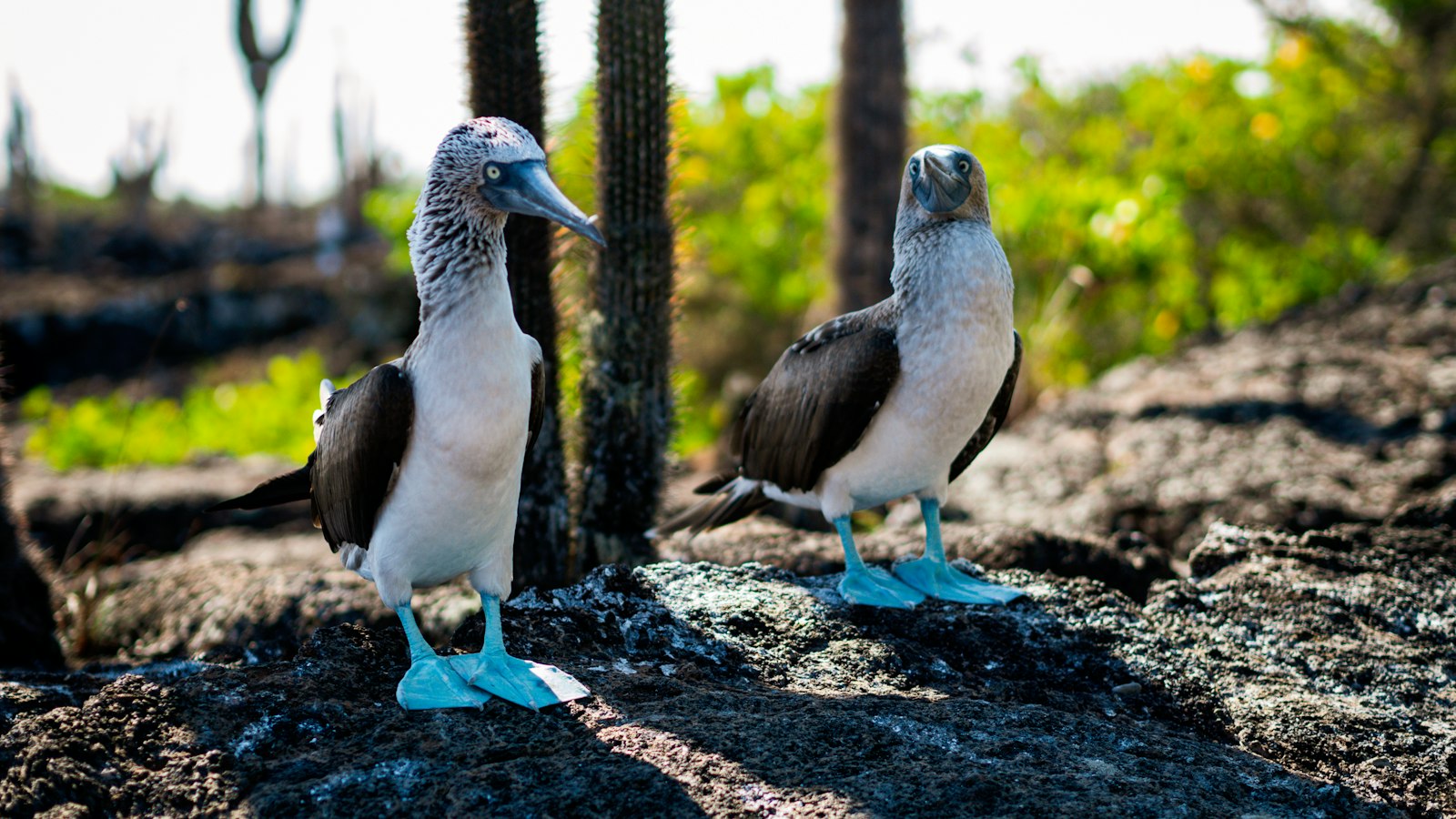
The Smart Guide to the Galapagos Blue-Footed Booby
Why their feet are blue, what the famous mating dance actually looks like, and where to see blue-footed boobies on an Island Hopping trip or Galapagos cruise on 2027.
One of the first Galapagos blue-footed boobies you meet may be standing just beside the trail, looking completely uninterested in the people watching it. That calmness is part of what makes seeing blue-footed boobies in Galapagos so memorable: you can stay on the marked trail with your guide and watch courtship, nesting and parenting behavior taking place surprisingly close by.
They are one of the animals travelers ask us about most often, and once you see the famous blue feet in real life, it is easy to understand why.
This guide explains what you may actually see at a visitor site, why those feet are blue, where the best places are to find them, and how to plan your itinerary if blue-footed boobies are high on your wildlife wish list.
Key takeaways
- A courting male blue-footed booby lifts each foot in a slow strut, sky-points, and offers a twig or stone, and the female answers with a honk.
- Their famous blue feet combine structural coloration in the skin with carotenoids obtained through their diet, so brighter feet signal a healthy, well-fed bird.
- Blue-footed boobies may seem completely unconcerned by visitors, but they are still wild animals. Stay on the trail, follow your guide and never approach a nest.
- North Seymour and Española are two of the best-known places to see them, while Los Túneles on Isabela is another favorite Smart Galapagos experience where you can spot them up close.
- Courtship and nesting activity change through the year, so check what is happening at each site around your dates rather than expecting a guaranteed display.
Watching Blue-Footed Boobies in the Galapagos: What You'll Actually See
Picture a typical morning on North Seymour. You step off the dinghy onto the rocks, climb to the marked trail, and your guide stops the group a few steps in. Just off the path, two blue-footed boobies stand on bare ground, a body-length apart. There is no nest of twigs, no grass, nothing soft. Each bird sits in a scrape in the dirt.

The Mating dance
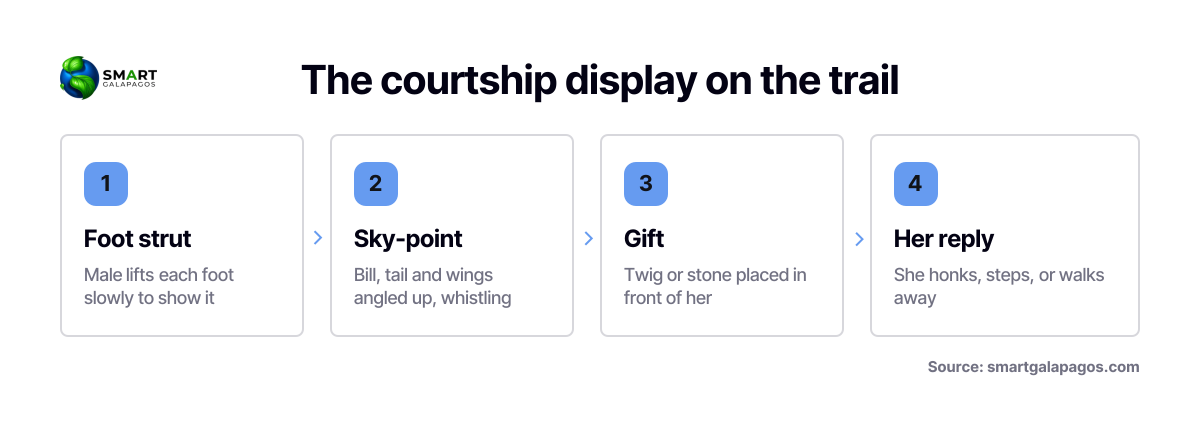
The male may begin by lifting one foot slowly, holding it up for a moment and then placing it carefully back on the ground before doing the same with the other. The walk is deliberate, slightly awkward and very entertaining to watch. Then he repeats it while turning to face the female.
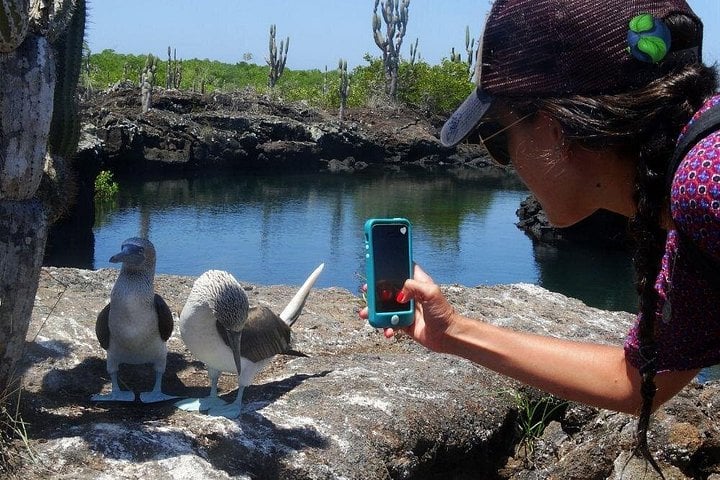
Then comes the famous sky-pointing display. He stretches his bill upward, raises his tail, angles his wings away from his body and whistles while continuing to show off those bright feet. He may also pick up a small twig or stone and offer it as part of the display.
The female answers in her own voice, which is a low honk rather than a whistle. She may step back with high feet of her own or sky-point in reply. If she is not interested, she simply walks off, and he starts again with the next bird.
When this is happening close to the visitor trail, there is no need to rush. One of the pleasures of a smart Galapagos wildlife experience is simply standing quietly and watching the behavior unfold.
Why Are Blue-Footed Boobies' Feet Blue?
The blue is not just a blue pigment. It is structural color: the skin of the feet contains collagen fibers arranged in a regular pattern, and that pattern scatters light so we see blue. Carotenoid pigments, which the bird absorbs from the fish it eats, then modify that color. A bird that is feeding well and healthy shows a brighter, cleaner blue, while a bird that is sick or underfed shows duller feet.
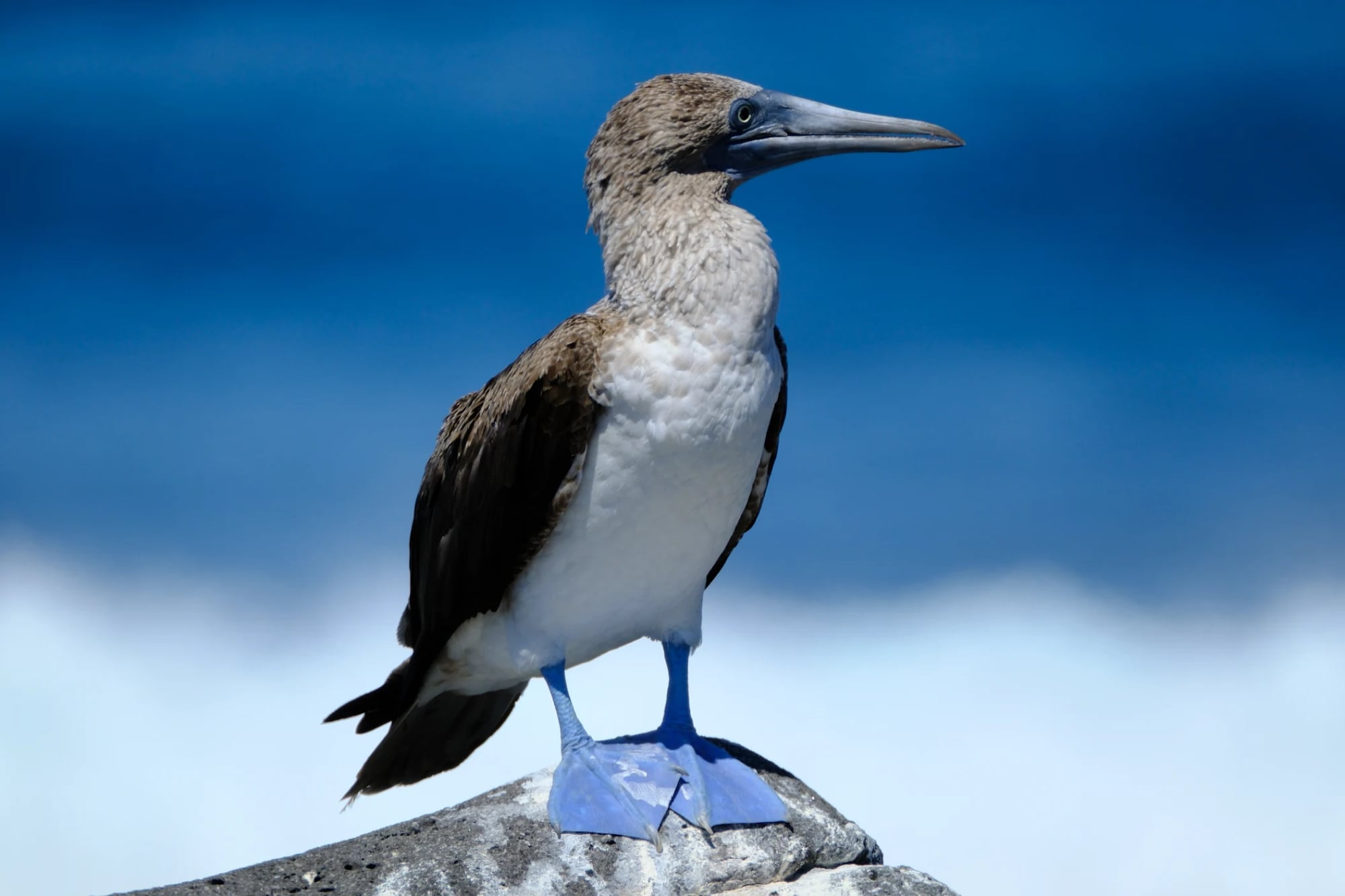
That is why the male works so hard to show them off. The feet tell the female something she can read at a glance about his health and condition, and a dull-footed suitor has little to offer in that conversation. Your guide will often point out how much the color varies from bird to bird, and once you know what to look for, you will start comparing them yourself.
Fishing, nests and a hard fact of boobie life
Blue-footed boobies may look slightly clumsy when they walk, but they are completely different animals once they are hunting.
From shore or from a yacht, you may see a bird circling above the water before suddenly folding its wings and diving almost vertically into the ocean. When several boobies find the same school of fish, the calm surface can suddenly turn into a burst of splashes as bird after bird plunges into the water.
Back at the nest, look at the ground around the sitting bird. Boobies lay their eggs on bare earth, and a ring of white guano surrounds each nest. That ring marks the boundary of the nest, and it is also your cue to stay on the trail, because you never step into it.
Your guide may also explain something that surprises many visitors: facultative siblicide. When two chicks hatch and food is short, the larger chick may push the smaller one out of the nest. It does not happen in every nest, and it only happens when the fish are scarce. It is part of how the species copes with an unpredictable ocean, so guides present it as natural behavior rather than something to intervene in.
Where blue-footed boobies live, and how close you can get
Despite being one of the symbols of Galapagos, blue-footed boobies are not endemic to the islands.
Their natural range extends along parts of the eastern Pacific coast of the Americas, from Mexico and Central America toward South America. Galapagos, however, remains one of the best-known places to experience them because important breeding colonies occur throughout the archipelago. The species is not considered threatened under its common conservation status.
People often ask whether the birds are friendly. They are not friendly in the way a pet is. They are unafraid of humans, and they ignore visitors, which is not the same thing as being approachable. The correct experience is to watch from the trail, maintain the distance established by your guide and let the birds behave naturally.
What About Darwin?
Charles Darwin is most famously associated with Galapagos finches and mockingbirds, whose differences between islands contributed to his later thinking about evolution.
Blue-footed boobies were among the seabirds present in the archipelago when HMS Beagle visited in 1835, but they are not the birds most closely associated with Darwin's scientific observations.
Smart Tip: Bring a zoom lens rather than trying to move closer. A longer lens allows you to photograph a courting pair or nesting bird while respecting the wildlife and staying comfortably on the visitor trail.
Which Islands Give You the Best Chance to See Blue-Footed Boobies
If blue-footed boobies are high on your list, North Seymour is normally the first place we discuss.
It is one of Galapagos' best-known seabird breeding sites and combines blue-footed boobies with magnificent frigatebirds, land iguanas, marine iguanas and sea lions, making the entire visitor walk interesting rather than turning the excursion into a search for just one species.
Española is another outstanding island for seabirds. Blue-footed boobies share the island with Nazca boobies, sea lions and, during their season, the famous waved albatross.
Then there is Isabela.
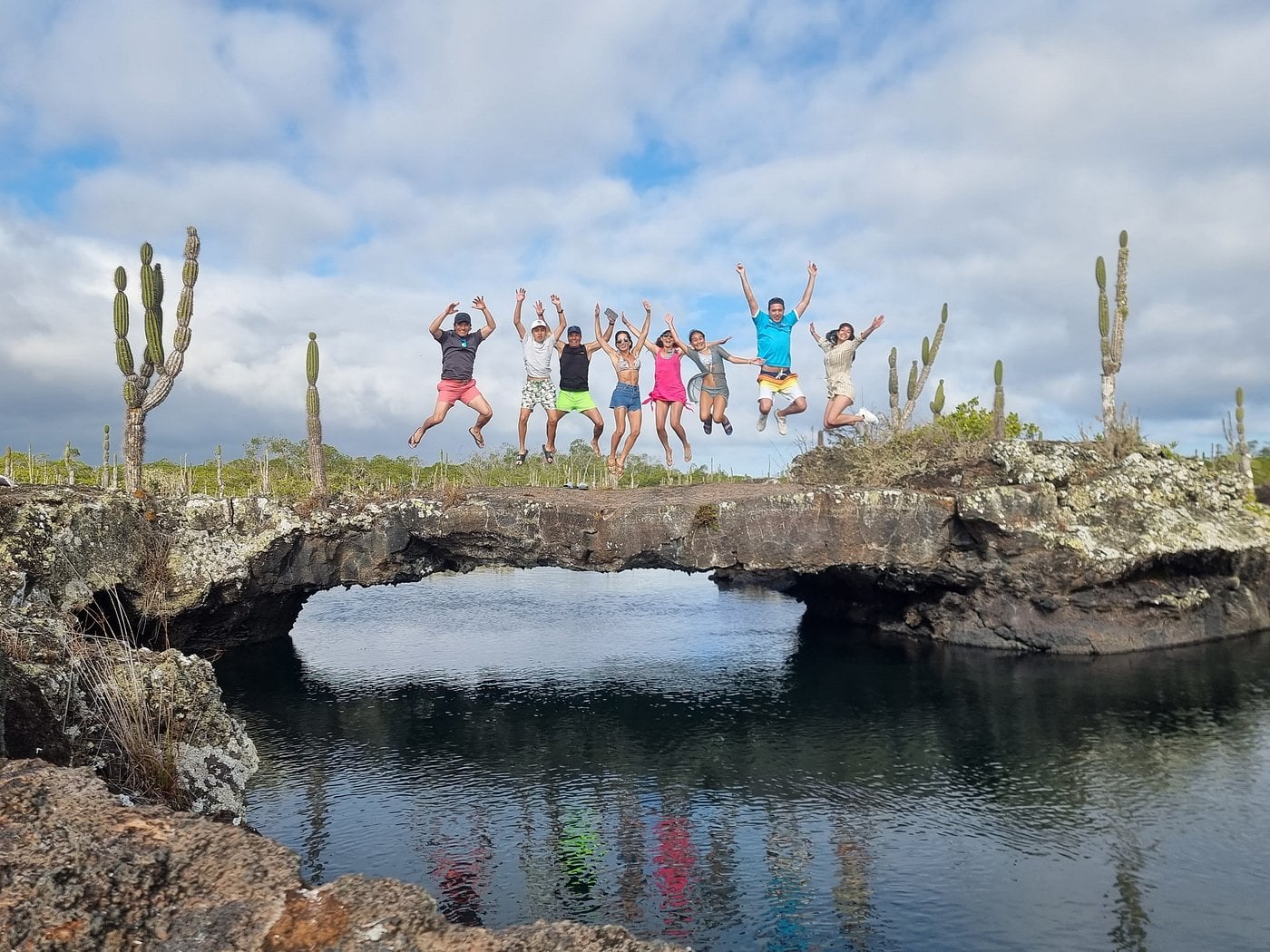
At Los Túneles, or Lava Tunnels, blue-footed boobies can perch and nest among the lava formations while the waters below offer some of our favorite snorkeling in Galapagos, with opportunities to encounter sea turtles, rays, whitetip reef sharks, seahorses and sometimes Galapagos penguins.
That combination of birds above the lava and marine wildlife below the surface is one of the reasons we enjoy including Los Túneles in our Island Hopping itineraries.
The honest limitation with all wildlife is timing.
Depending on the time of year and what is happening at each colony, you might see courtship, eggs, chicks or adult birds simply resting and feeding. No one should guarantee a specific display on a particular day.
A local Galapagos Travel Assistant can instead help you choose the visitor sites that give you the best realistic opportunities for the wildlife you most want to see.
Island Hopping tour or Cruise for Blue-Footed Boobies?
If you are staying on land, a yacht excursion to North Seymour from Santa Cruz is one of the easiest ways to add a strong blue-footed booby experience to your trip. Your Galapagos Island Hopping itinerary can then continue to Isabela and San Cristobal, combining wildlife excursions with hotel stays, restaurants and more flexibility in the evenings.

Cruises work differently because the yacht can navigate while you sleep or eat, making it easier to connect several remote visitor sites in one continuous itinerary. Southern cruise routes that include Española and Lobos Island, for example, which can be especially attractive for travelers interested in seabirds.
If you are travelling with a big family or private group, our guide to Galapagos cruises for large families and groups is also worth reading before deciding between individual cabins and a private yacht charter.
Neither style is better in every case. Island hopping gives you great experiences with more time in towns and more flexibility for a lower cost, while a cruise gives you a wider spread of sites in the same number of days. Check out here our Island Hopping vs Cruises for a full comparison.
And, of course, you can combine both.
If you are still deciding where to base your trip, choosing which Galapagos island is best for you is a good next read, because booby sites are only one part of the picture.
Planning Your Trip Around the Wildlife You Want to See
Start with a short list of what you most want to see. If boobies are at the top, say so before you pick a hotel or a boat, because that one priority shapes which islands you visit and how many days you give each.
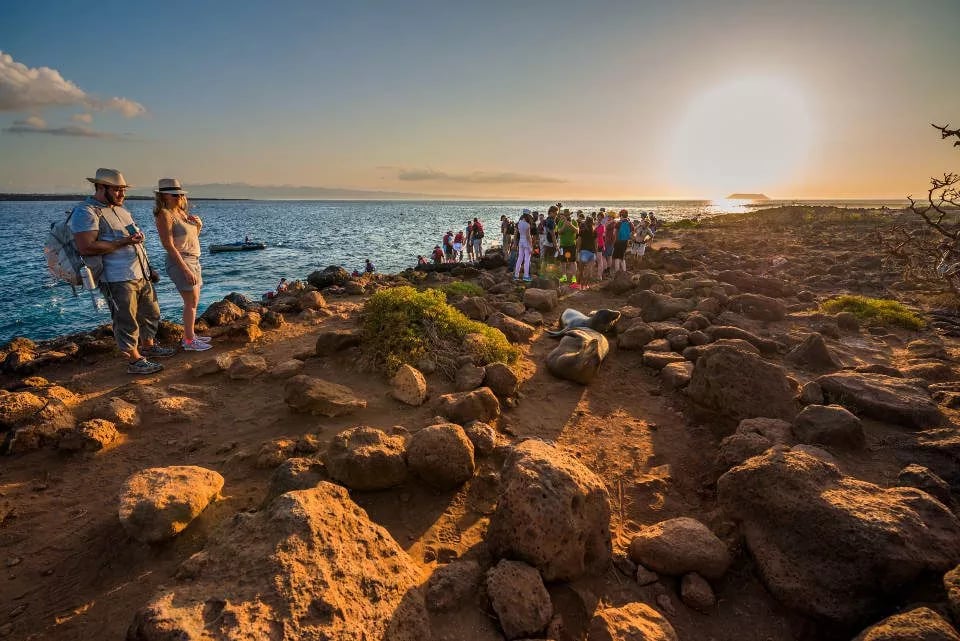
Many travelers choose an itinerary by how it looks in a brochure and then discover that it skips the sites they cared about. We design the other way round. Smart Galapagos has served more than 1,500 travelers, and the pattern is consistent: the trips people remember are the ones built around their own wildlife priorities and experiences, not around a standard package.
A good plan matches your priorities to the sites, then checks them against your dates, your comfort level and your budget. A quiet half hour watching a blue-footed booby courtship display is usually more memorable than racing through three visitor sites simply to say you were there.
If you would like help shaping that, you can schedule a free meeting with a Galapagos Travel Assistant. You will talk with one person who knows the islands, the boats and the logistics, and who can tell you honestly what to expect at each site before you commit to anything.

Frequently asked questions
What type of bird did Darwin study in the Galapagos?
Darwin is most famously associated with the Galapagos finches and mockingbirds, whose differences between islands contributed to his thinking about evolution. Blue-footed boobies were present in the archipelago during the Beagle voyage, but they are not the birds most closely associated with his scientific work.
Are blue-footed boobies friendly to humans?
They are unafraid of people, but they are not friendly in a pet sense. They simply ignore visitors, so you can watch them closely from the trail. You never touch them or approach a nest, and your guide sets the distance.
How is a blue-footed booby different from a Nazca or red-footed booby?
All three species can be found in Galapagos, but they are easy to distinguish once you know what to look for. Blue-footed boobies have their famous turquoise-blue feet, Nazca boobies are larger with mostly white plumage and dark wing edges, while red-footed boobies have bright red feet and are particularly associated with places such as Genovesa and Punta Pitt.
Can I see the courtship dance at any time of year?
Not reliably. Blue-footed boobies can be seen in Galapagos throughout the year, but breeding behavior varies by season, colony and ocean conditions. Courtship activity is often associated with the breeding period around June through August, although wildlife never follows an exact tourism calendar. Your Smart Galapagos Travel Assistant can tell you what is usually happening at each site around your dates.
Where is the best place to see blue-footed boobies in Galapagos?
For most travelers, North Seymour is our first recommendation because it is one of Galapagos' strongest seabird visitor sites and can be reached both by Island Hopping day yacht and on selected cruise itineraries. Española and Los Túneles on Isabela are also excellent places to include when blue-footed boobies are an important wildlife priority.

Ready to plan your Galapagos journey?
Tell us what you want to experience, and we’ll help you build a trip around you.
Continue Exploring
More Travel Guides from the Smart Galapagos Journal

Best Galapagos Cruises for large Families & Groups
Read Article
Which Galapagos Island to Visit? Find the Best Island for You
Read Article
Galapagos Travel FAQs: Everything You Need to Know Before You Go
Read Article
The Smart Galapagos Difference: Why Specialists Matter
Read Article
Instagram vs. Reality: Is Galapagos Really Worth the Hype?
Read Article
7 Best Galapagos Tours for Couples: Island Hopping & Romantic Cruises
Read Article
Galapagos Penguins: 12 Fun Facts & Best Places to See Them
Read Article
How to Choose the Perfect Galapagos Cruise: A Complete Guide
Read Article
What to Pack for Galapagos: Complete Packing Guide
Read Article
Galapagos Giant Tortoises: Where to See Them, Best Time to Visit & Best Tours
Read Article
Galapagos Travel Guide 2026: Smart Tips for Planning Your Trip
Read Article
Why Visit Galapagos? 8 Reasons It Belongs on Your Travel List
Read Article
Best Galapagos Island Hopping Tours for Couples: 7 to 10 Day Itineraries
Read Article
Bartolome Island & Sullivan Bay: Why We Love It
Read Article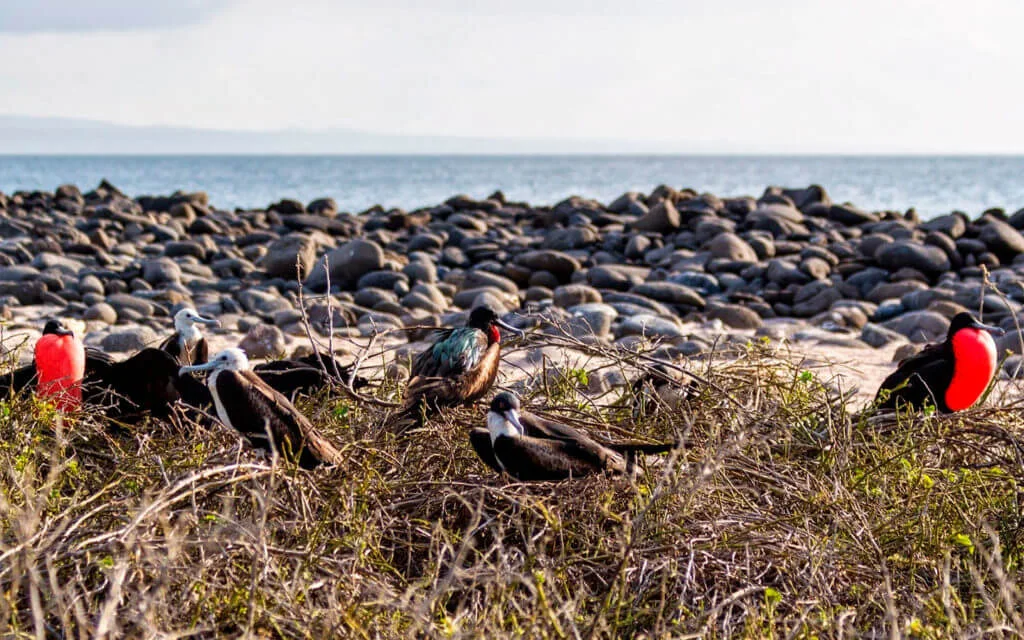
North Seymour Island Yacht Tour: Why We Love It
Read Article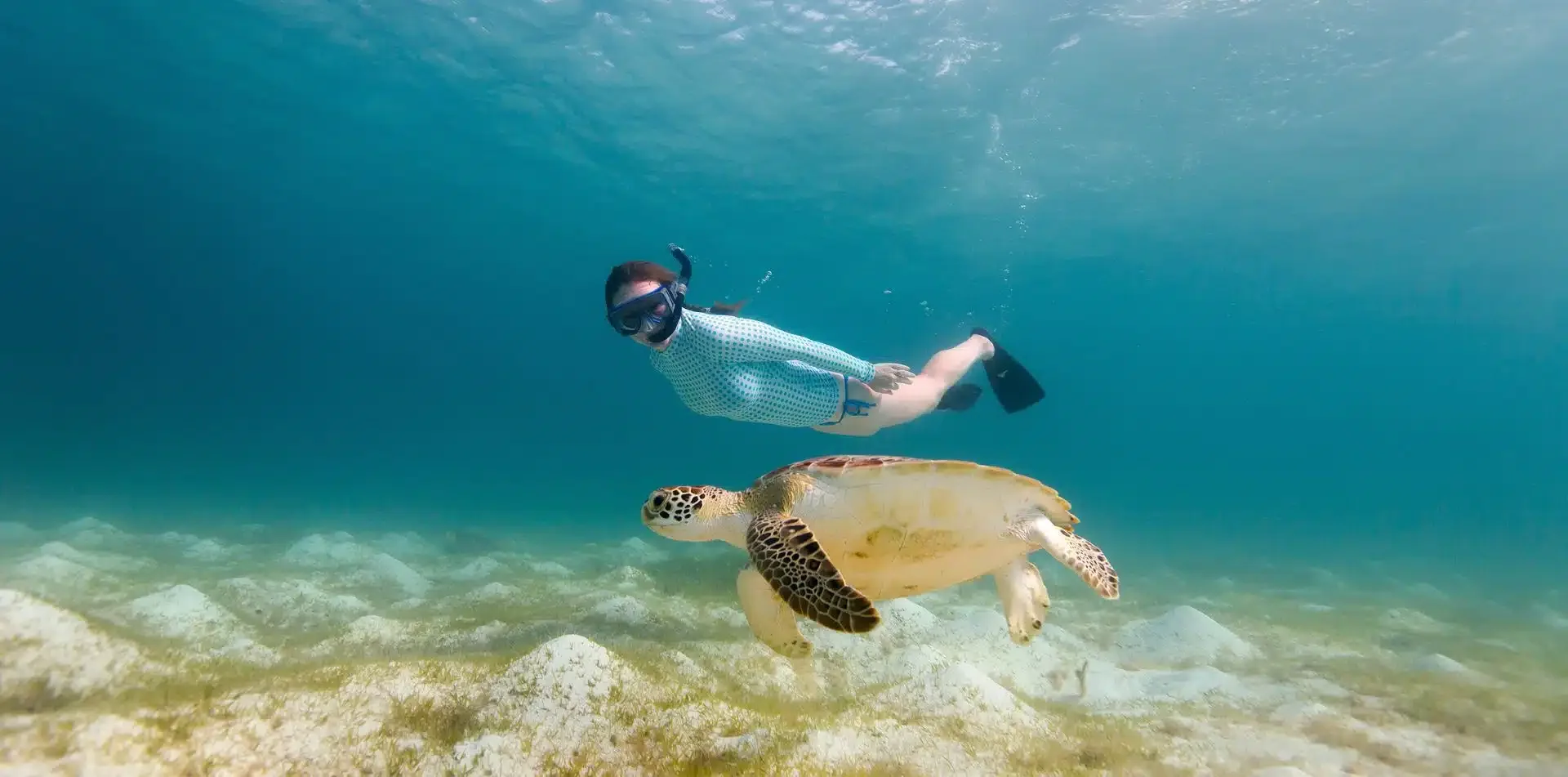
Why Travel to Galapagos with Smart Galapagos?
Read Article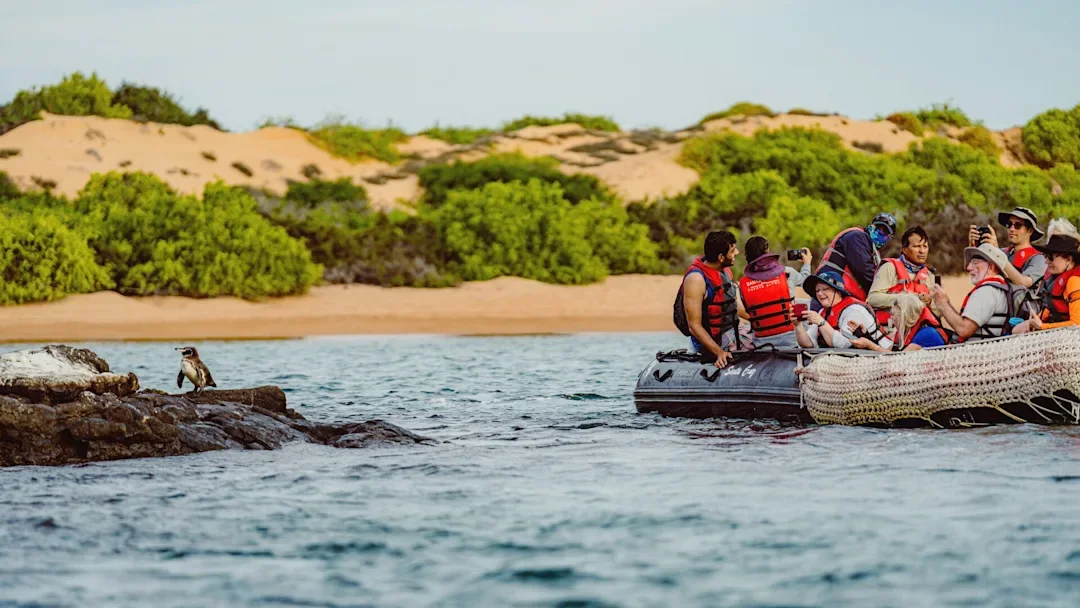
Galapagos Cruise vs Island Hopping: Which Is Better for Your Trip?
Read Article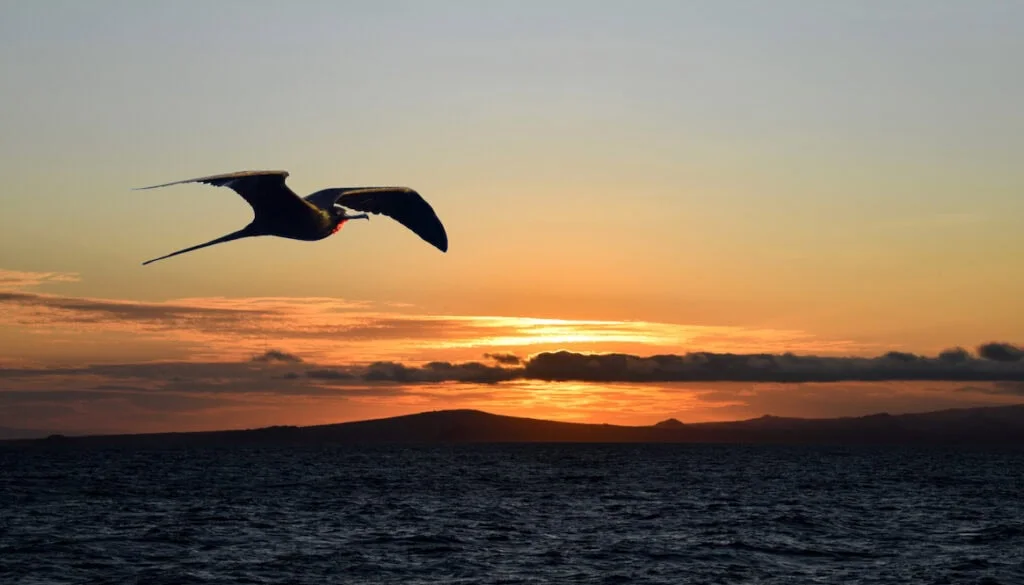
Best Time to Visit Galapagos: Month-by-Month Weather & Wildlife Guide
Read Article
Galapagos Honeymoon on a Budget: The Ultimate Guide for Young Couples
Read Article
Do You Need a Guide in the Galapagos?
Read Article