
Galapagos Marine Iguanas: Facts, Where to See & Best Tours
Published: · JPM
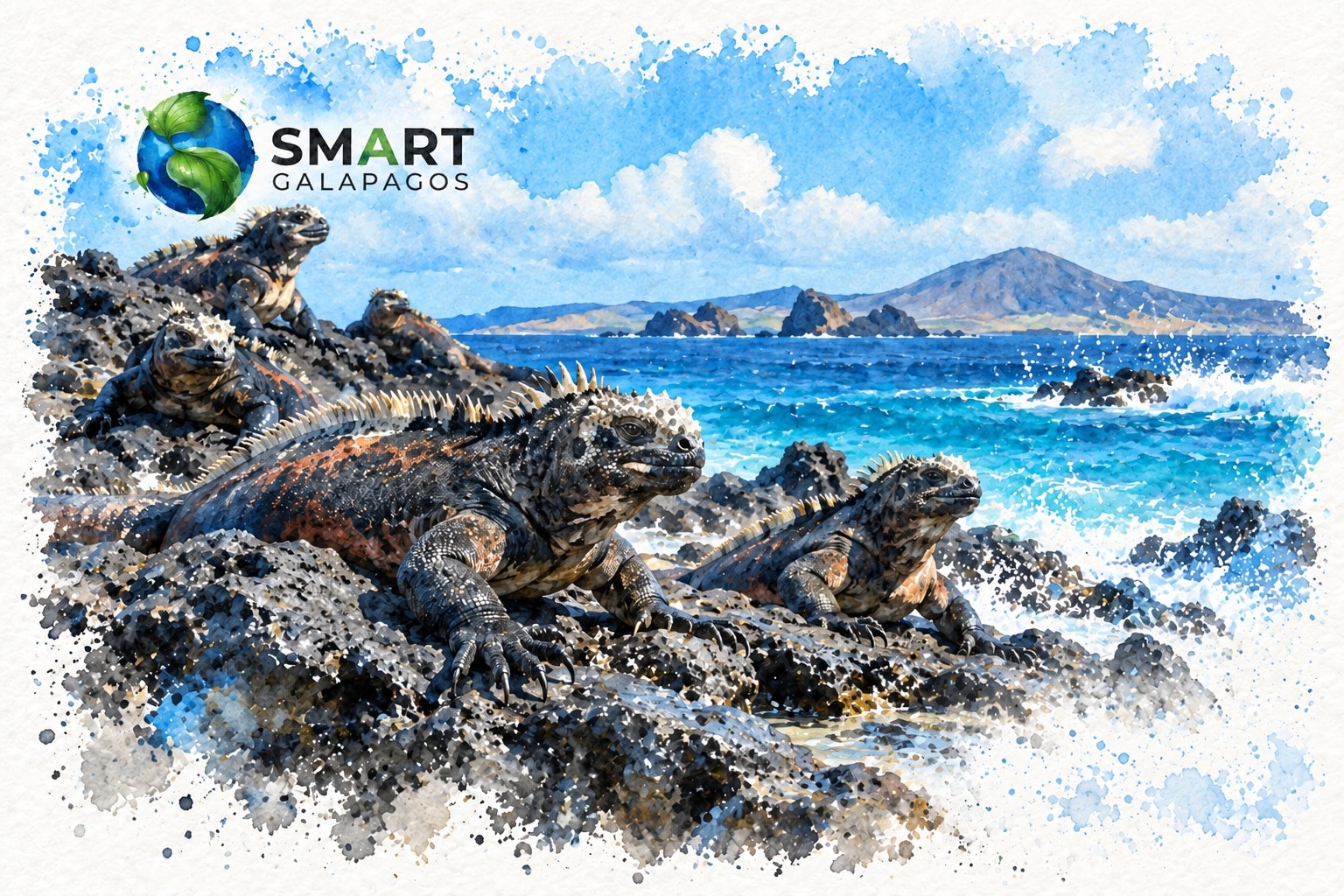
Why do the Marine Iguanas enter the ocean, how they survive on marine algae, and where to see them on an Galapagos Island Hopping trip or cruise.
The Smart Guide to the Galapagos Marine Iguana
A marine iguana resting on black volcanic lava can look almost like part of the landscape. Its dark skin, spiny crest and salt-covered head make it one of the most recognizable animals in the Galapagos. But the real surprise comes when it slips into the Pacific: this is the only lizard in the world that swims in the ocean.
The Galapagos marine iguana (Amblyrhynchus cristatus) is endemic to these islands. It feeds mainly on marine algae and has developed unusual adaptations that allow it to swim, feed underwater and cope with the salt it takes in from seawater.
You can look for marine iguanas on several islands, from the lava shores of Fernandina to the coastal paths of Isabela and San Cristobal. This guide covers their behavior, the best visitor sites to consider, and how to choose an itinerary around the wildlife you hope to see.
Key takeaways
- Marine iguanas are the world's only marine lizards and feed mainly on algae.
- They warm themselves on volcanic rocks after entering the cold ocean.
- Special glands help them remove excess salt through their nostrils by spitting.
- Fernandina's Punta Espinoza is a well-known site for observing large groups.
- Isabela, Santa Cruz, Española and San Cristobal also offer opportunities to see them.
- Underwater encounters are also possible.
- Your itinerary's visitor sites matter more than the yacht or island name alone.
This guide explains how Galapagos marine iguanas actually live, what a bad El Niño year does to them, and where you can watch them on a real itinerary. It also helps you choose between island hopping and a cruise if iguanas are high on your list.
Watching Marine Iguanas in Galapagos: What You'll Actually See
On a coastal walk, you may first notice what looks like a collection of dark shapes scattered across the lava. Look more closely and you will see marine iguanas basking together, gripping the rocks with their claws or slowly moving toward the water.
Their routine is closely connected to temperature. After feeding in the ocean, they return to land and spend time in the sun warming their bodies. You may also notice them expelling salt through their nostrils, leaving a white residue around their heads.
The best way to observe them is to slow down, keep your distance and let your guide point out details you might otherwise miss.
Why Are Marine Iguanas So Special?
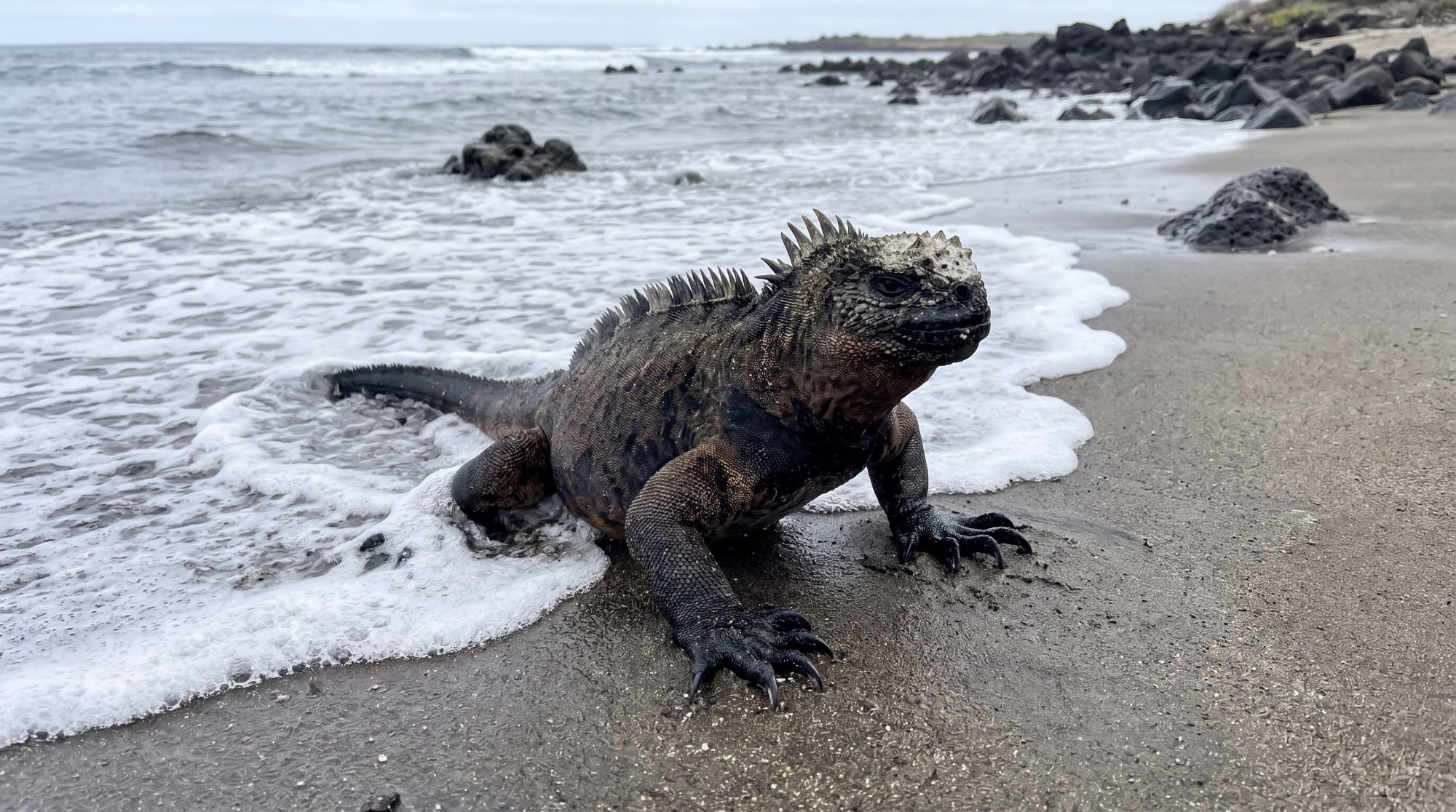
Marine iguanas evolved from land-dwelling ancestors and adapted to feed on algae in the ocean. Their flattened tails help propel them through the water, while their strong claws help them hold onto rocky surfaces.
They also have specialized nasal glands that remove excess salt from their bodies. This is why you may see them sneeze or notice white salt deposits around their nostrils.
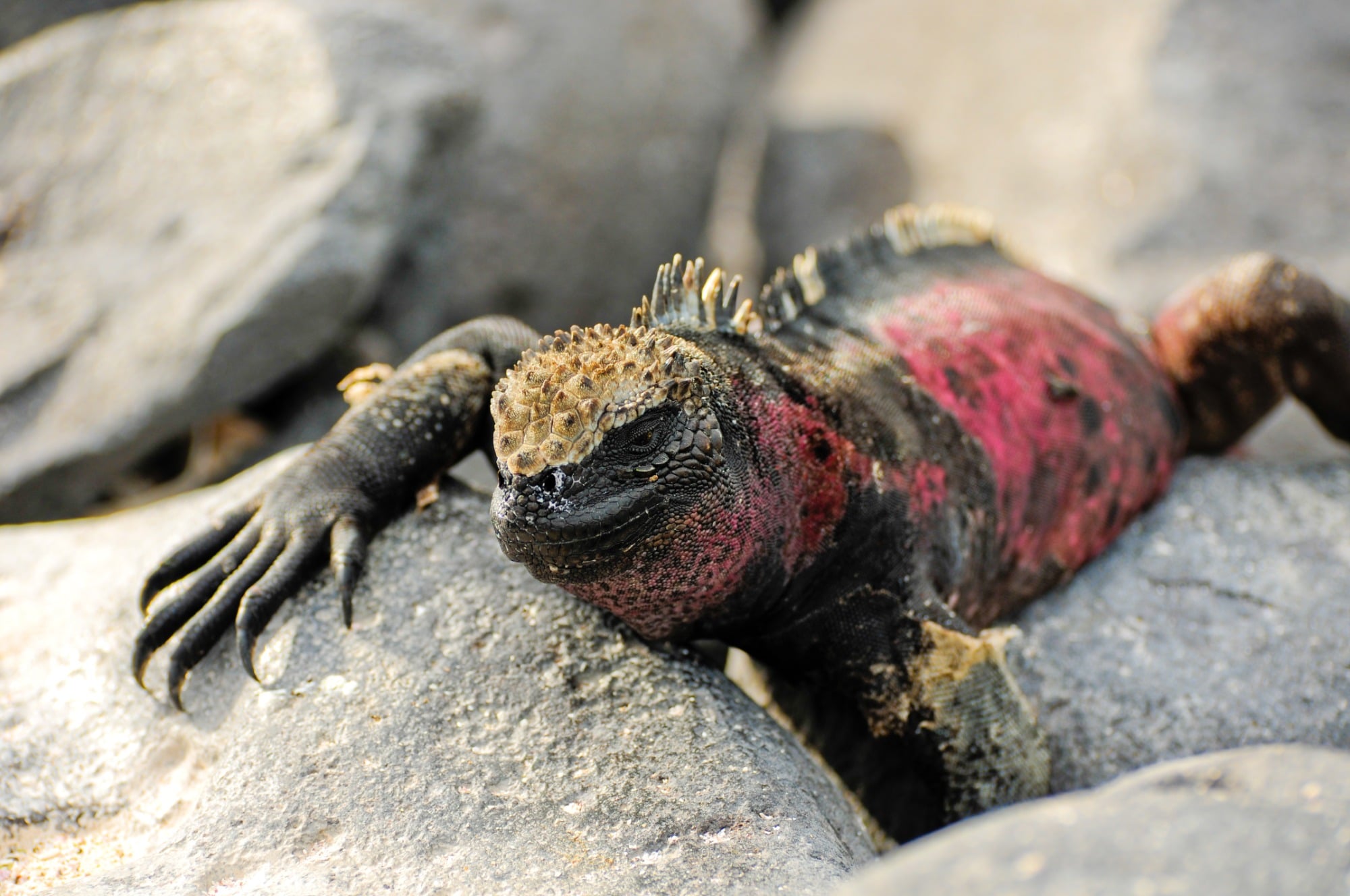
Their dark coloration helps them absorb heat from the sun after swimming in cold water. During the breeding season, some adult males—particularly on Española—develop brighter reddish, pink and green tones. The intensity of these colors varies between island populations and seasons.
How Marine Iguanas Survive El Niño
Marine iguanas depend on marine algae, so changes in ocean conditions can affect their food supply. During El Niño events, warmer water and reduced nutrient upwelling can reduce algae availability and create difficult conditions for these reptiles.
A 2025 study published in the Journal of Experimental Biology compared marine iguanas measured during an El Niño year with animals measured during the following neutral year. The researchers found lower resting metabolic rates during the El Niño measurement period, alongside differences in body condition. These findings suggest that marine iguanas can reduce their energy demands when food becomes scarce, although this response does not eliminate the risks of prolonged food shortages.
To learn more about the impact of the El Niño phenomenon in the Galápagos, read our blog: El Niño in the Galápagos: Wildlife, Weather & Travel Guide.
Where Marine Iguanas Live, and How Close You Can Get
Marine iguanas live along rocky coastlines throughout much of the Galapagos Archipelago. Their dark bodies blend into the lava, so look carefully before stepping near rocks or resting areas.
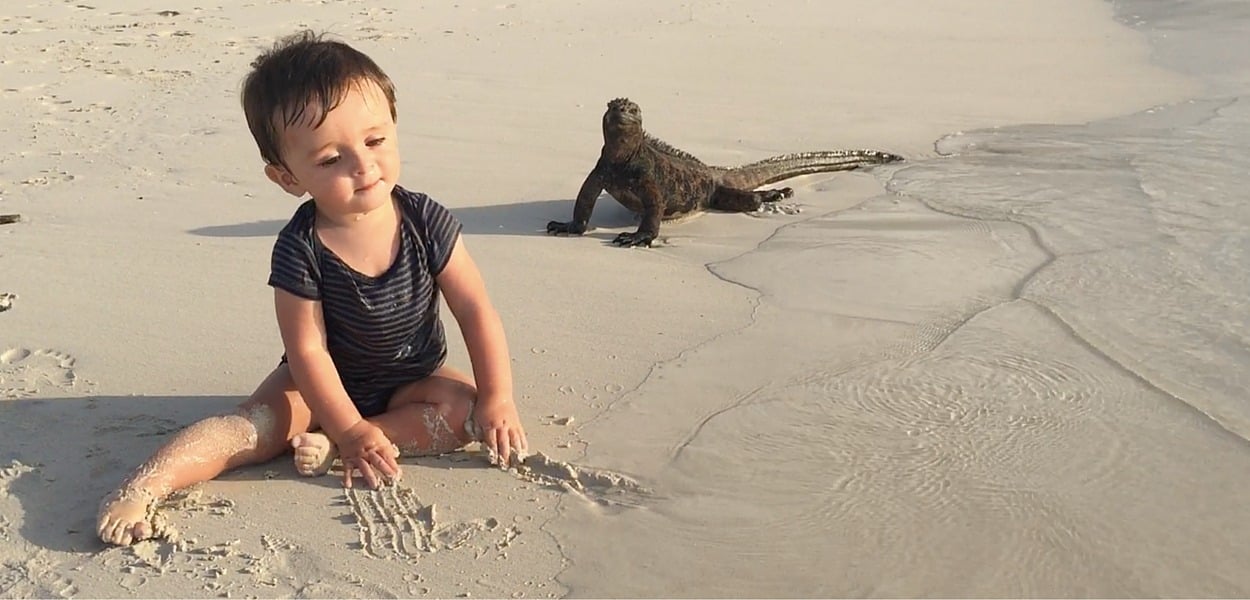
Although they may appear comfortable around visitors, they are wild animals. Never touch or feed them, leave their path to the sea clear, stay on marked trails and follow your naturalist guide's instructions.
Smart Tip: A zoom lens is often more useful than trying to get closer. It lets you photograph their spiny crests, claws and salt-covered faces without disturbing them.
Which Islands Give You the Best Chance to See Marine Iguanas?
The best place to observe marine iguanas depends on the visitor sites included in your trip. These are some of the locations worth considering.
Fernandina – Punta Espinoza
Punta Espinoza is one of the archipelago's best-known locations for observing large groups of marine iguanas. The rocky coastline provides plenty of places for them to bask, and the site is also known for wildlife such as flightless cormorants, sea lions and Galapagos penguins.
Fernandina is generally visited on selected western-island cruise itineraries. Check the route carefully if this is a priority for you.
Isabela – Las Tintoreras
Close to Puerto Villamil, Las Tintoreras is a convenient wildlife excursion for travelers staying on Isabela. Marine iguanas may be seen resting on the lava, while white-tip reef sharks can sometimes be observed in the channels.
Depending on the excursion, you may explore the area by kayak, panga or guided walk.
Isabela – Los Tuneles (Cabo Rosa)
Los Tuneles is known for its unusual lava formations, natural arches and snorkeling opportunities. Marine iguanas may be seen resting on the rocks, while the surrounding water offers opportunities to look for sea turtles, rays, reef sharks and seahorses.
An underwater encounter with a marine iguana is possible, but should not be expected on every visit.
Santa Cruz – Tortuga Bay
Tortuga Bay is a popular coastal walk near Puerto Ayora. Look along the shoreline and rocky areas for marine iguanas resting in the sun or moving between the rocks and water. It is an accessible option for travelers staying on Santa Cruz.
Española – Punta Suarez and Gardner Bay
Española is particularly interesting for its colorful male marine iguanas. During the breeding season, some develop reddish, pink and green tones that distinguish them from populations on other islands.
Punta Suarez and Gardner Bay are different visitor sites, each with its own coastal landscape. They are included on selected cruise itineraries, so check the route before choosing your trip.
San Cristobal – La Lobería
La Lobería, near Puerto Baquerizo Moreno, is a coastal area where you may observe marine iguanas alongside sea lions. Its proximity to town makes it a convenient option for travelers exploring San Cristobal from a hotel.
Santa Fe Island
Santa Fe is another possible place to observe marine iguanas, depending on the excursion or cruise route. If you want to visit this island, confirm that it is part of your specific itinerary rather than assuming it is included.
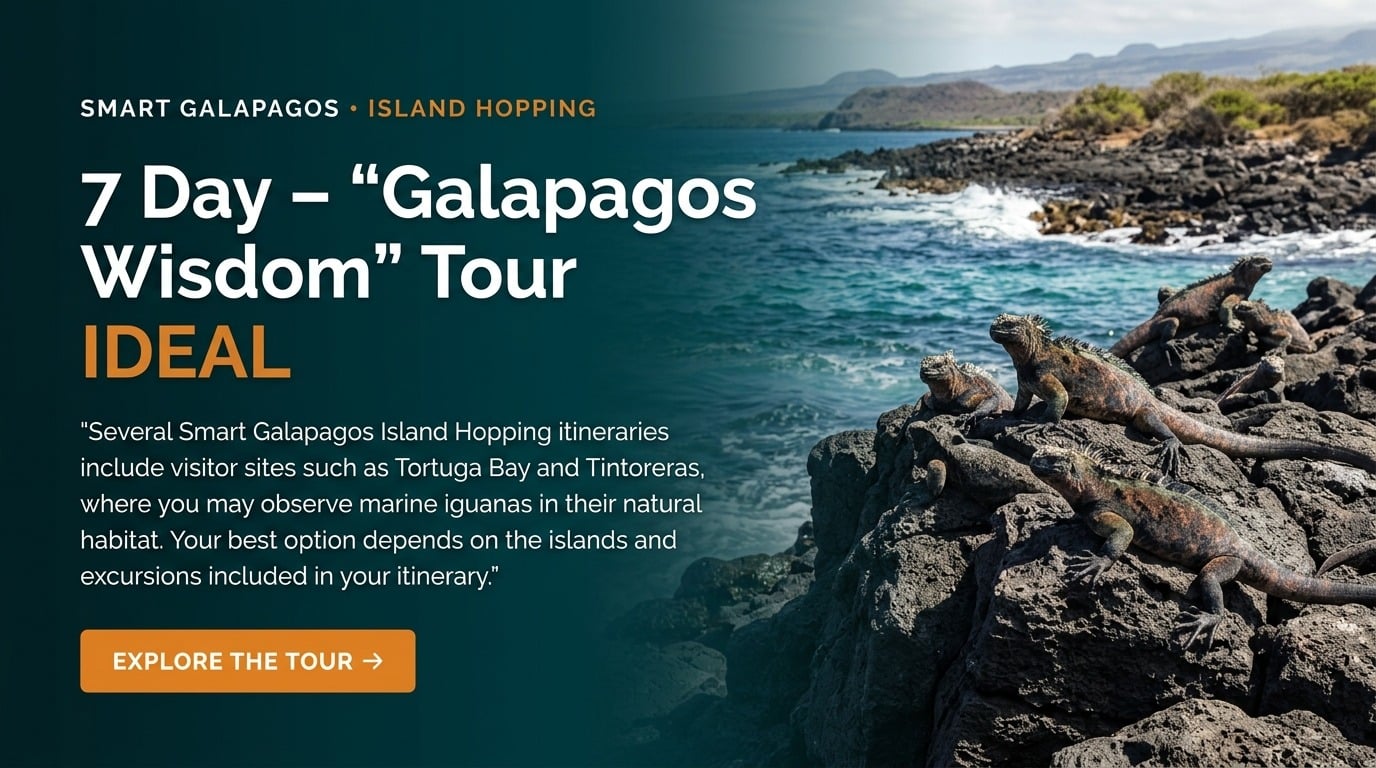
Smart Tip: Ask your guide about the tide and the best time to observe iguanas along the shore. At low tide, algae may be exposed in shallow areas, offering a chance to watch feeding behavior.
Snorkeling with Marine Iguanas: What to Expect
Seeing a marine iguana underwater can be one of the most memorable wildlife encounters in Galapagos. You may notice one swimming with its tail moving from side to side or feeding on algae attached to a submerged rock.
However, snorkeling with marine iguanas is not guaranteed at any particular site. Their presence and feeding behavior depend on the location, water conditions, tide and time of day.
Los Tuneles on Isabela is an interesting place to explore marine habitats, but the main reason to visit is the combination of lava formations and diverse marine life. If you happen to see an iguana underwater, give it plenty of room and never swim directly above it or block its way back to shore.
Island Hopping Tour or Cruise for Marine Iguanas?
Both ways of traveling put you in front of marine iguanas. The difference is which sites you reach and how you spend the hours in between.
If you are staying on land, Isabela, Santa Cruz and San Cristobal offer several opportunities to observe marine iguanas through guided excursions and coastal walks. Island Hopping also gives you time in local towns, restaurants and hotels between activities.
Cruises work differently. They can connect remote visitor sites such as Punta Espinoza on Fernandina and Punta Suarez on Española, depending on the itinerary. This can be particularly attractive if you want to explore different regions of the archipelago without changing hotels.
| Experience | Island Hopping | Galapagos Cruise |
|---|---|---|
| Marine iguana sites | Las Tintoreras, Los Tuneles, Tortuga Bay and La Lobería | Punta Espinoza, Punta Suarez, Gardner Bay and Santa Fe, depending on route |
| Accommodation | Hotels on inhabited islands | Yacht cabins |
| Daily pace | Land-based excursions and time in towns | Planned expedition schedule |
| Flexibility | More freedom between excursions | Fixed itinerary and navigation schedule |
| Best for | Travelers who enjoy local towns and a mix of guided activities and free time | Travelers prioritizing remote visitor sites and a continuous expedition |
Neither style is automatically better. The right choice depends on which visitor sites matter most, how much time you have and the kind of travel experience you prefer.
Read our complete comparison of Galapagos Island hopping vs. Cruises before deciding.
You can also see our live cruise availability here.
Planning Your Trip Around the Wildlife You Want to See
Start with the wildlife experiences you care about most. If marine iguanas are high on your list, tell your travel planner whether you are more interested in seeing large colonies, observing their behavior on land, visiting Española during the breeding season or exploring the possibility of underwater encounters.
Then match those priorities to the visitor sites, dates and travel style. A land-based itinerary that includes Isabela and San Cristobal can offer rewarding coastal wildlife experiences, while a cruise that visits Fernandina or Española may be a better fit if those remote sites are essential to your plans.
Planning Your Galapagos Trip Around Marine Iguanas
If marine iguanas are high on your wildlife wish list, start by identifying the experiences you are most interested in. You may want to observe large colonies on volcanic rocks, watch them along the shoreline, or visit Española during the breeding season.
The best itinerary depends on the visitor sites included, your travel dates and whether you prefer Island Hopping or a multi-day cruise. At Smart Galapagos, we help travelers choose their experiences first and then match them with the right route, hotels and excursions.
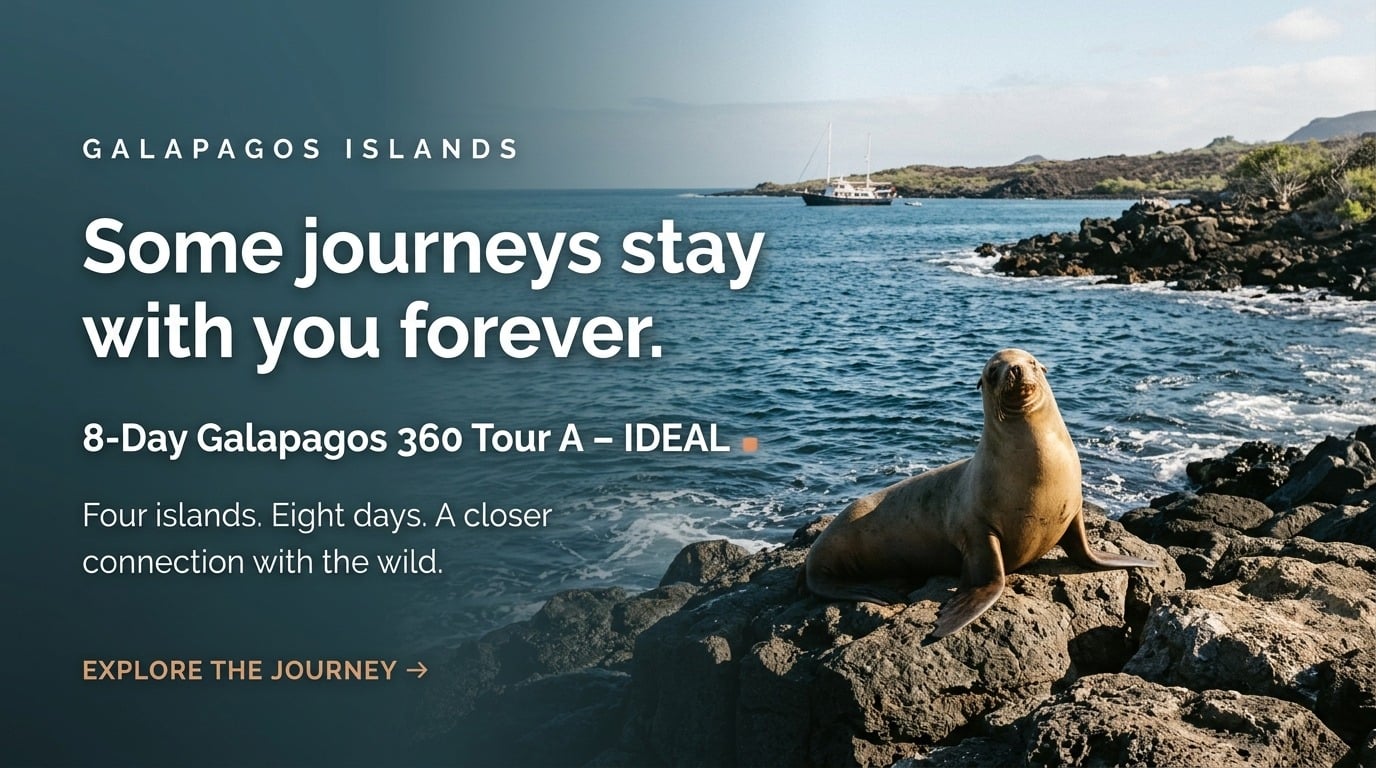
For travelers with limited time, the 6-Day Galapagos Wisdom – Ideal combines Santa Cruz and Isabela, while the 8-Day Galapagos 360 Tour A – Ideal also includes Santa Fe and San Cristobal, with visits to sites such as Tintoreras and Cabo Rosa.
Neither itinerary visits Fernandina or Punta Suárez on Española. If these locations are a priority, consider a cruise itinerary that includes them.
Remember, a rewarding Galapagos trip is not about visiting as many islands as possible, but about choosing the visitor sites that offer the experiences you value most.
For more help comparing destinations, read our guide to Which Galapagos Island Is Best to Visit?
Frequently asked questions
Are Galapagos marine iguanas dangerous?
No, they are not aggressive toward visitors, and the spray you may see is just salt being sneezed out. They are used to people passing by, but you should still keep a respectful distance and follow your naturalist guide's instructions.
When is the best time of day to see marine iguanas?
Mornings are good for watching them warm up on dark lava rock. Low tide is the best moment to see them feeding on exposed algae, so ask your guide for the tide times on the day you visit.
Can you see marine iguanas while snorkeling?
Often you can glimpse them swimming close to shore, usually as a dark, snake-like shape near the surface. It is never guaranteed, because it depends on the site, the tide and the animals themselves.
Where is the best place to see marine iguanas in Galapagos?
Punta Espinoza on Fernandina is one of the best-known sites for observing large groups of marine iguanas. Isabela, Santa Cruz, Española and San Cristobal also offer opportunities to see them. The best location for your trip depends on the visitor sites included in your itinerary.
Which is better for seeing marine iguanas, island hopping or a cruise?
Choose a cruise if you want remote sites such as Gardner Bay on Española or Santa Fe. Choose island hopping if you prefer staying in hotels in town and are happy with San Cristóbal's La Lobería and the main islands.
Why travel with Smart Galapagos?
Smart Galapagos is a local Galapagos travel specialist with more than 15 years of experience helping travelers plan Island Hopping trips and cruises. We have welcomed more than 1,500 travelers and received over 450 five-star reviews, with many new guests discovering us through recommendations from previous travelers.
Your personal Galapagos Travel Assistant helps you compare itineraries, selected hotels, yachts and local experiences according to your dates, interests and budget. We also provide local support before and during your trip, so you have someone familiar with the islands helping coordinate the details.
For every traveler, we plant a native tree in Ecuador as part of our commitment to more responsible travel.
Plan Your Galapagos Wildlife Journey with Local Specialists
Ready to see marine iguanas, giant tortoises, blue-footed boobies and sea lions in their natural habitat?
Whether you prefer a land-based Island Hopping trip or an expedition cruise, we can help you choose an itinerary around the wildlife and visitor sites that interest you most. Tell us what you want to experience, and a Galapagos Travel Assistant will help you compare the options.

Ready to plan your Galapagos journey?
Tell us what you want to experience, and we’ll help you build a trip around you.
Continue Exploring
More Travel Guides from the Smart Galapagos Journal
El Niño in Galapagos: Wildlife, Weather & Travel Guide
Read Article
Galapagos Budget Honeymoon: Romantic Trips & Tips for Couples
Read Article
Galapagos Smart Packing List: What to Pack for Your Galapagos trip
Read Article
Galapagos Black Friday Deal: 15% Off Island Hopping Tours
Read Article
Galapagos in March: Weather, Wildlife, Snorkeling & Smart Travel Tips
Read Article
Best Things to Do in Galapagos: Wildlife, Snorkel, Beaches & Adventure
Read Article
Galapagos Blue-Footed Boobies: Best Places, Facts & Mating Dance
Read Article
Best Galapagos Cruises for large Families & Groups
Read Article
Which Galapagos Island to Visit? Find the Best Island for You
Read Article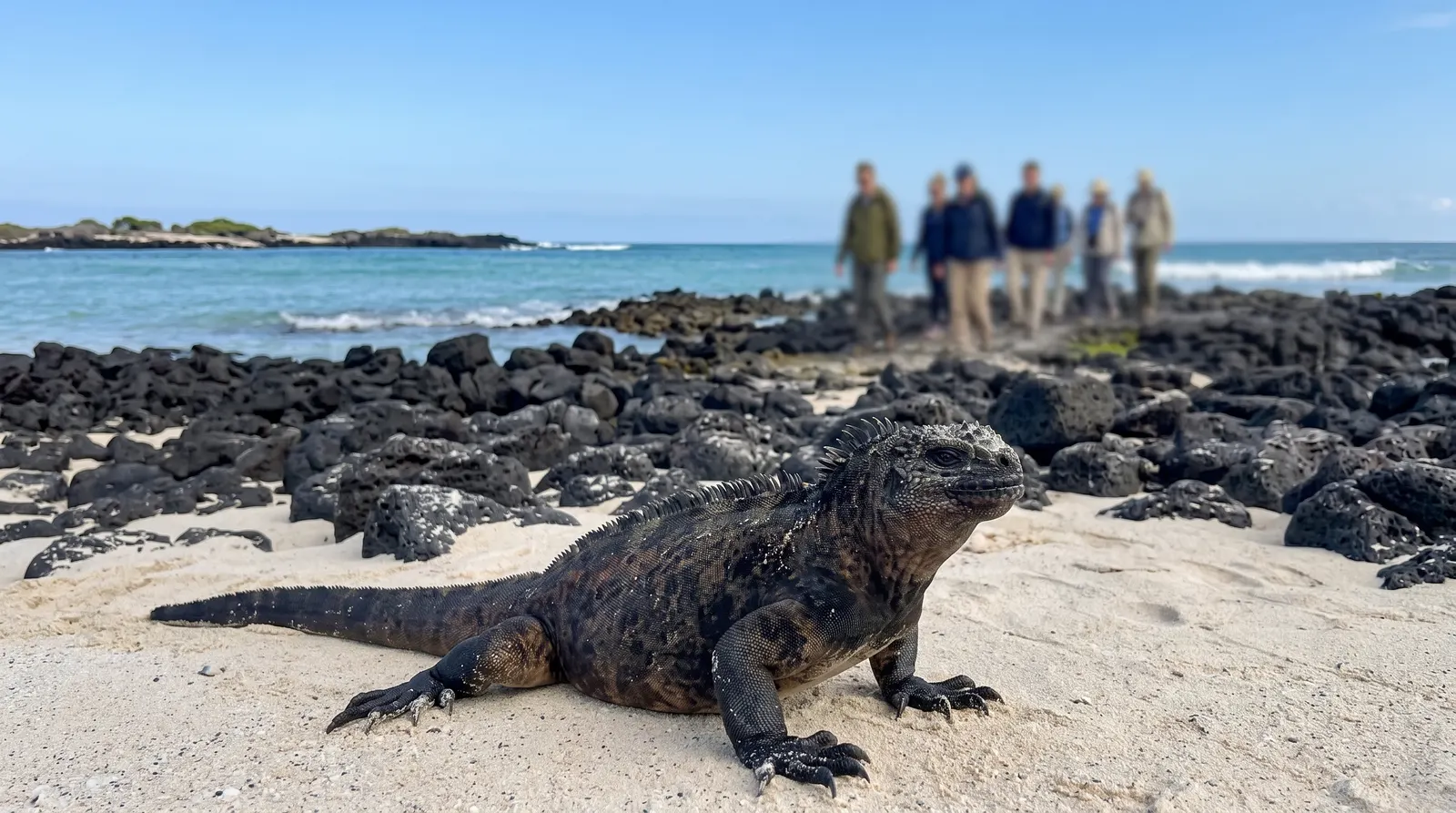
Galapagos Travel FAQs: Everything You Need to Know Before You Go
Read Article
The Smart Galapagos Difference: Why Specialists Matter
Read Article
Instagram vs. Reality: Is Galapagos Really Worth the Hype?
Read Article
7 Best Galapagos Tours for Couples: Island Hopping & Romantic Cruises
Read Article
Galapagos Penguins: 12 Fun Facts & Best Places to See Them
Read Article
How to Choose the Perfect Galapagos Cruise: A Complete Guide
Read Article
Galapagos Giant Tortoises: Where to See Them, Best Time to Visit & Best Tours
Read Article
Galapagos Travel Guide 2026: Smart Tips for Planning Your Trip
Read Article
Why Visit Galapagos? 8 Reasons It Belongs on Your Travel List
Read Article
Best Galapagos Island Hopping Tours for Couples: 7 to 10 Day Itineraries
Read Article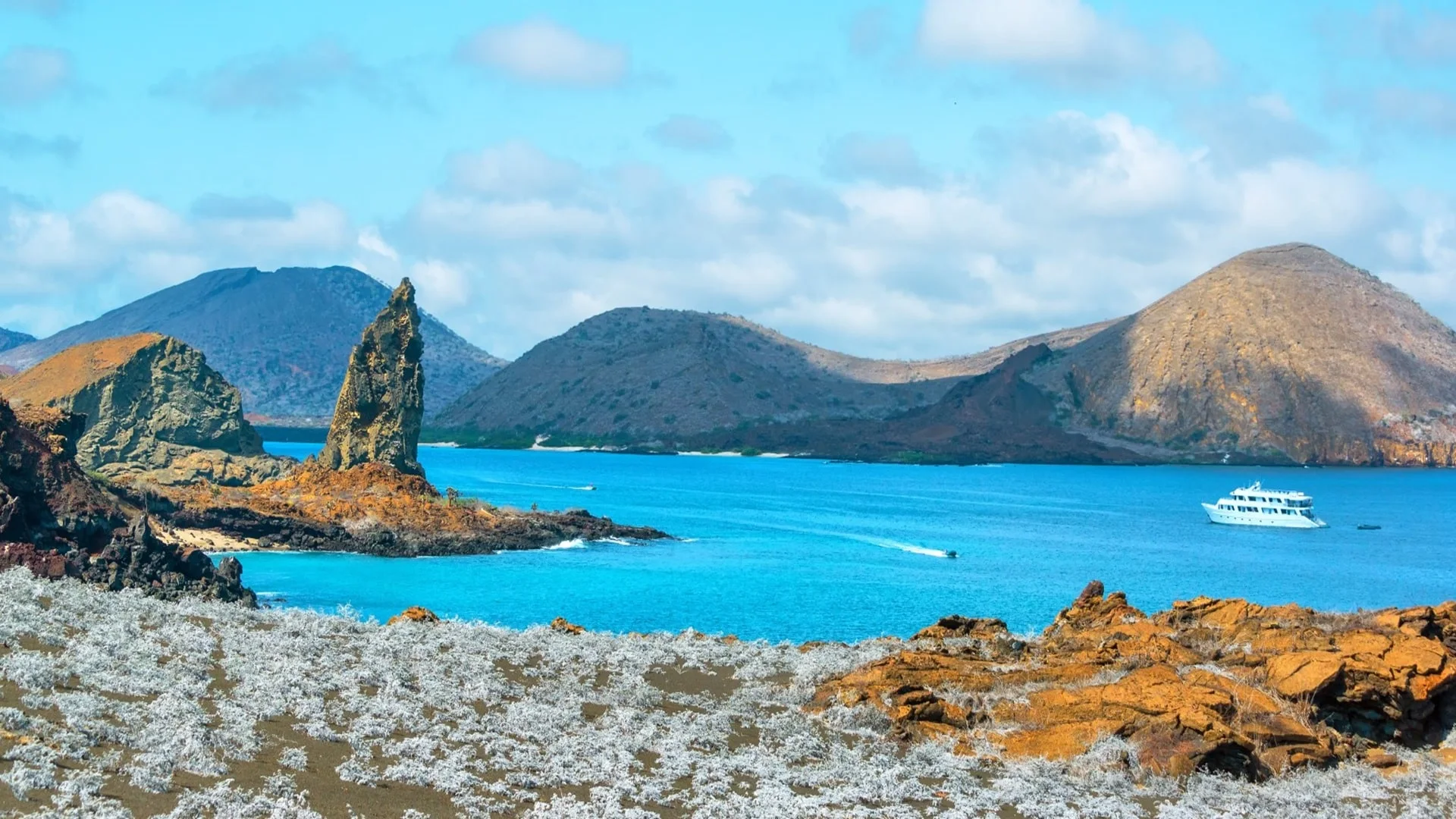
Bartolome Island & Sullivan Bay: Why We Love It
Read Article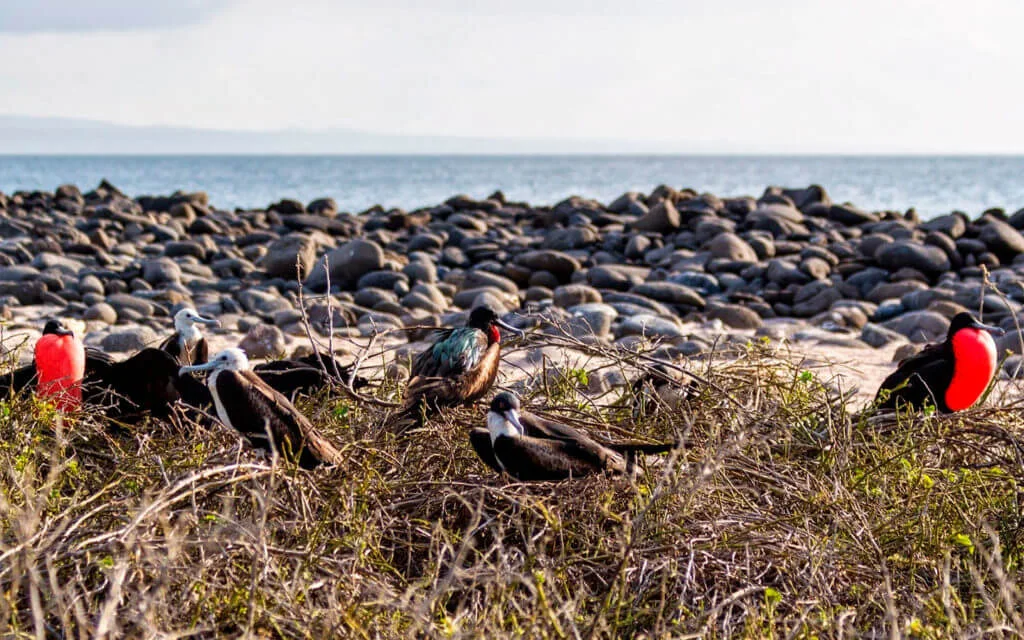
North Seymour Island Yacht Tour: Why We Love It
Read Article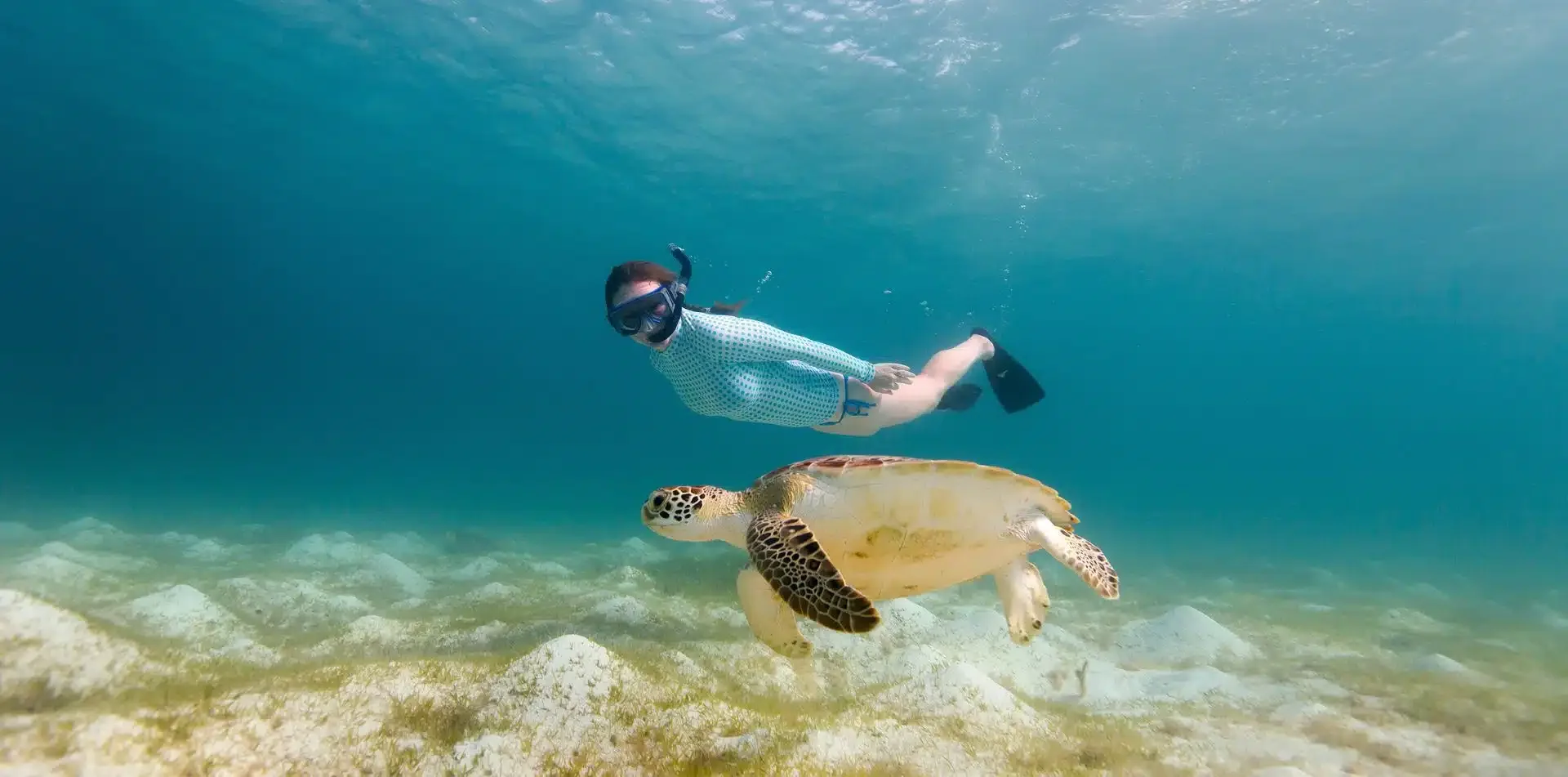
Why Travel to Galapagos with Smart Galapagos?
Read Article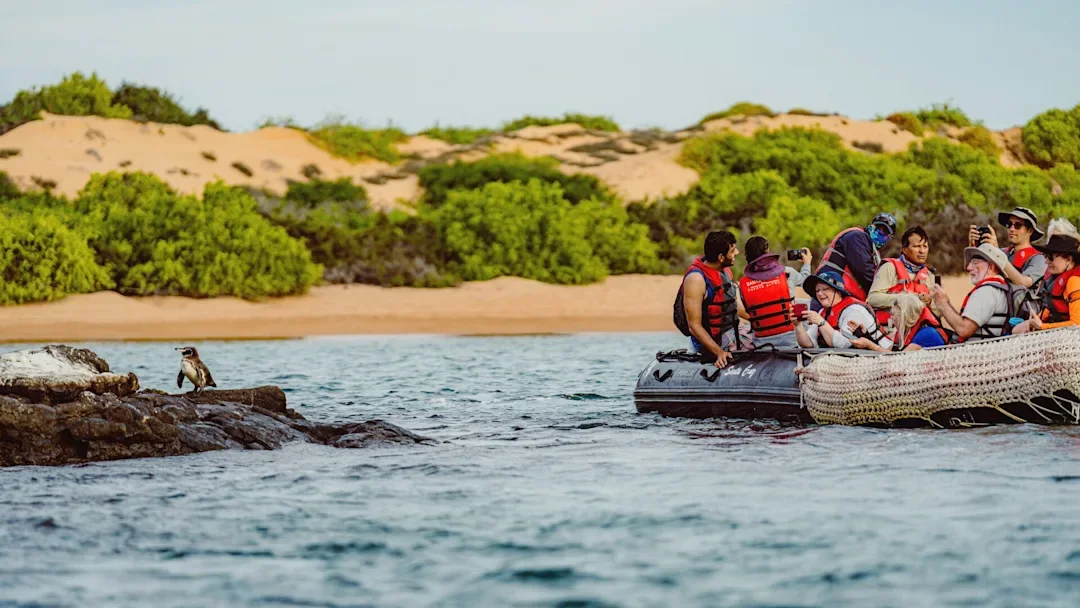
Galapagos Cruise vs Island Hopping: Which Is Better for Your Trip?
Read Article
Best Time to Visit Galapagos: Month-by-Month Weather & Wildlife Guide
Read Article
Do You Need a Guide in the Galapagos?
Read Article