
Galapagos Flamingo: Facts, Population & Best Places to See Them
Published: · JPM
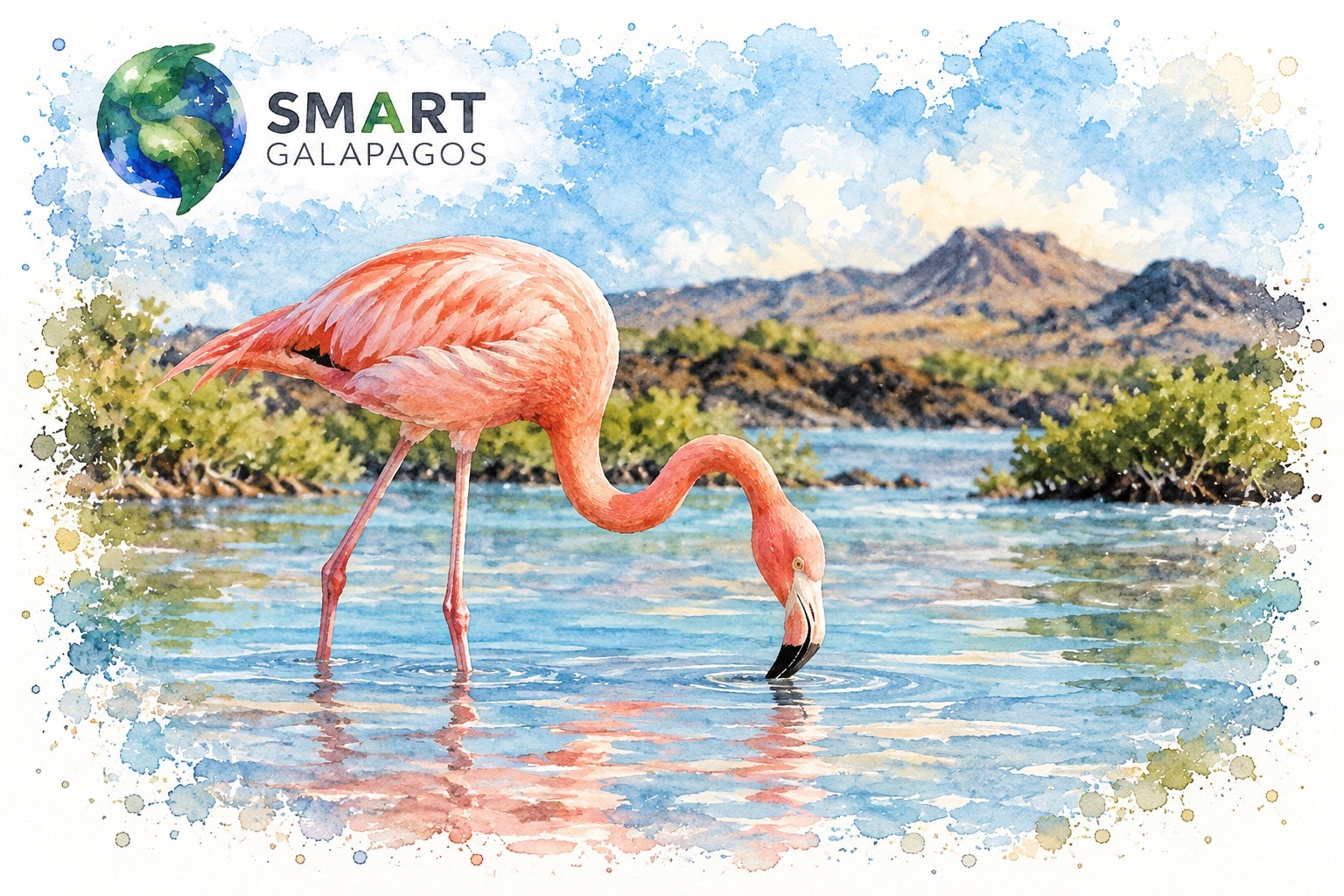
Discover the Galapagos flamingo, how many live in the islands, why flamingos are pink, what they eat, where to see them and more.
Imagine walking beside a quiet lagoon near Puerto Villamil on Isabela Island and suddenly noticing a flash of bright pink among the wetlands. A Galapagos flamingo slowly moves through the shallow water, its head almost upside down as it filters food from the lagoon.
The Galapagos flamingo belongs to the American flamingo (Phoenicopterus ruber) species, but the small resident population in these islands is isolated and genetically distinctive. The Charles Darwin Foundation currently estimates only around 600 flamingos across the archipelago, making this one of the smallest and most special bird populations in Galapagos.
I have personally seen flamingos in Rábida (Where I got engaged on a Galapagos Cruise), Las Bachas and many times on Isabela, and if seeing flamingos is important to you, Isabela would be my first choice.
Galapagos Flamingo at a Glance
| Fact | Quick Answer |
|---|---|
| Scientific name | Phoenicopterus ruber |
| Estimated Galapagos population | Around 600 birds |
| Endemic to Galapagos? | The species is not endemic, but the Galapagos population is isolated and distinctive |
| Best island to look for them | Isabela |
| Other important locations | Rábida, Las Bachas, Floreana, Santiago |
| Flamingo lifespan | Around 40–60 years for American flamingos |
| Flamingo eggs | Usually one egg per nesting attempt |
| Incubation | Fast: About 28 days |
| Flamingo diet | Algae, crustaceans, insect larvae, mollusks and other small aquatic organisms |
| Why are flamingos pink? | Carotenoids obtained through their diet |
| Best time to see them | Year-round; breeding depends on lagoon and rainfall conditions |
How Many Galapagos Flamingos Are There?
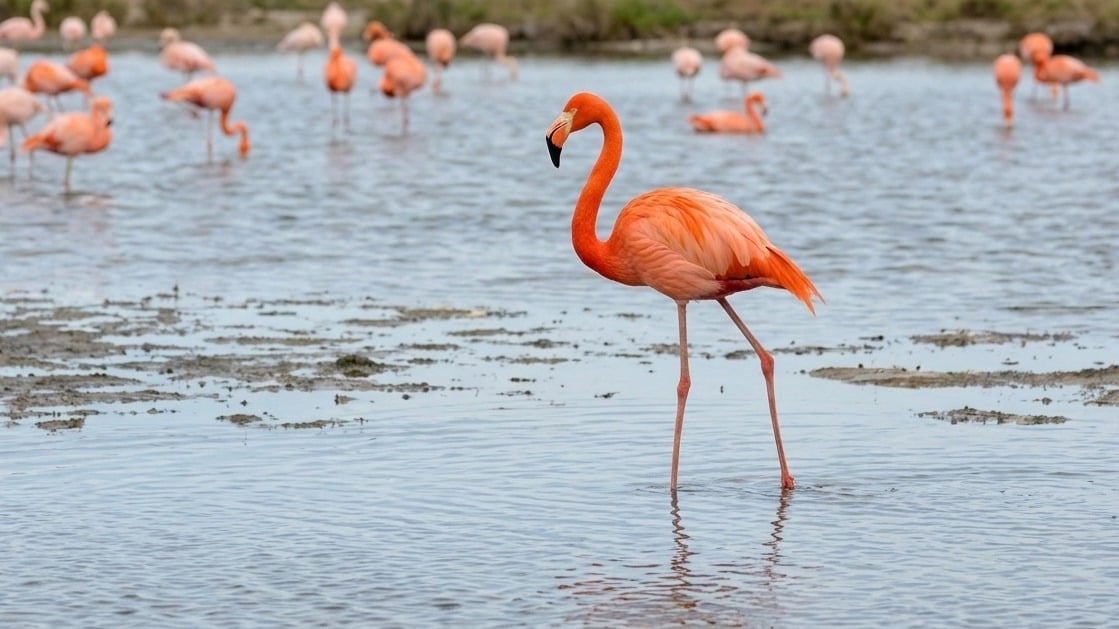
The Charles Darwin Foundation currently estimates the Galapagos flamingo population at only around 600 individuals. These birds move between suitable lagoons depending on water levels, food availability and breeding conditions, so they are not permanently concentrated in one location.
One Galapagos National Park census recorded 218 flamingos on Isabela, representing 82% of the 264 birds counted during that particular survey. This does not mean that 82% of the entire Galapagos population permanently lives on Isabela, but it clearly demonstrates how important the island's wetlands are for flamingos.
This is also one reason I recommend Isabela when travelers tell me that flamingos are high on their wildlife wish list.
Best Places to See Galapagos Flamingos
Isabela Island for seeing Flamingos
For Island Hopping travelers, Isabela is our first recommendation. The wetlands around Puerto Villamil contain several shallow lagoons where flamingos may feed and rest, and in my experience Flamingo Lagoon very often has at least a few birds around, although wildlife is never guaranteed.
I have also seen flamingos surprisingly close along the ecological trail toward the Giant Tortoise Breeding Center, where the boardwalk crosses several wetlands. This is one of the things I really like about Isabela: you can spend the morning snorkeling, visiting Los Tuneles and Cabo Rosas or exploring another part of the island and later walk through the wetlands looking for flamingos without needing another full-day excursion.
Rábida Island for Flamingos
I have personally seen flamingos on Rábida Island, where the reddish volcanic landscape makes the experience completely different from Isabela. Behind the red beach is a saltwater lagoon where flamingos may feed, and Galapagos National Park reported flamingos nesting there again after more than 20 years without recorded nesting.
Their return followed years of ecological recovery after invasive rodents were eradicated from Rábida island, making this a particularly interesting example of how ecosystem restoration can help native wildlife return to former breeding areas.
Las Bachas Beach in Santa Cruz
Las Bachas is another place where I have personally seen Galapagos flamingos, including on day yacht itineraries combined with North Seymour Island.
Behind the beautiful white-sand beach are shallow lagoons where flamingos and other waterbirds may appear. You can arrive thinking mainly about the beach and sea turtles and then suddenly find a few flamingos quietly feeding just inland.
Las Bachas is also especially meaningful to me personally because this is where I got engaged, so it is one of those Galapagos visitor sites I will always remember for much more than the wildlife.
Floreana & Other Flamingo Locations
Punta Cormorant on Floreana is another classic Galapagos flamingo location. Birds have also been recorded at Punta Moreno and Quinta Playa on Isabela, Puerto Egas on Santiago and several other lagoons around the archipelago.
Their presence changes with lagoon conditions and food availability, so these should always be considered good places to look for flamingos rather than guaranteed sightings.
When Is the Best Time to See Galapagos Flamingos?
Galapagos flamingos are resident birds, so they always live in Galapagos and can be seen throughout the year. There is no perfectly fixed flamingo breeding season because nesting depends strongly on rainfall, food availability and water levels in the lagoons, meaning breeding activity can shift between years and locations.
If seeing flamingos is one of your priorities, the island and visitor sites included in your itinerary matter more than choosing one specific month. Isabela remains our first recommendation for Island Hopping travelers because spending several nights there gives you multiple opportunities to visit suitable flamingo habitat instead of depending on a single sighting.
If you are considering the warmer months, our Galapagos in March guide explains what else may be happening around the islands at that time.
Smart Tip: If seeing flamingos is important to you, tell your Smart Galapagos Travel Assistant before choosing your itinerary. We can prioritize enough time on Isabela or compare routes that include other flamingo habitats, but we would never guarantee a wildlife sighting.
Why Are Flamingos Pink?
Flamingos are not born pink. Flamingo chicks begin life with pale gray or white feathers, and their famous pink coloration develops gradually because of what they eat.
Galapagos flamingos feed on algae and small aquatic organisms that contain natural pigments called carotenoids. As these pigments are processed by the bird's body, they accumulate in the feathers and skin, producing the pink and reddish colors we associate with adult flamingos.
The intensity of the color can vary depending on diet, health and other factors, but the basic explanation is simple: flamingos are pink because of pigments in their food.
Flamingo Diet: What Do Galapagos Flamingos Eat?
The flamingo diet includes algae, small crustaceans, insect larvae, mollusks and other tiny aquatic organisms found in shallow lagoons. These foods not only provide nutrition but also supply the carotenoid pigments responsible for their famous color.
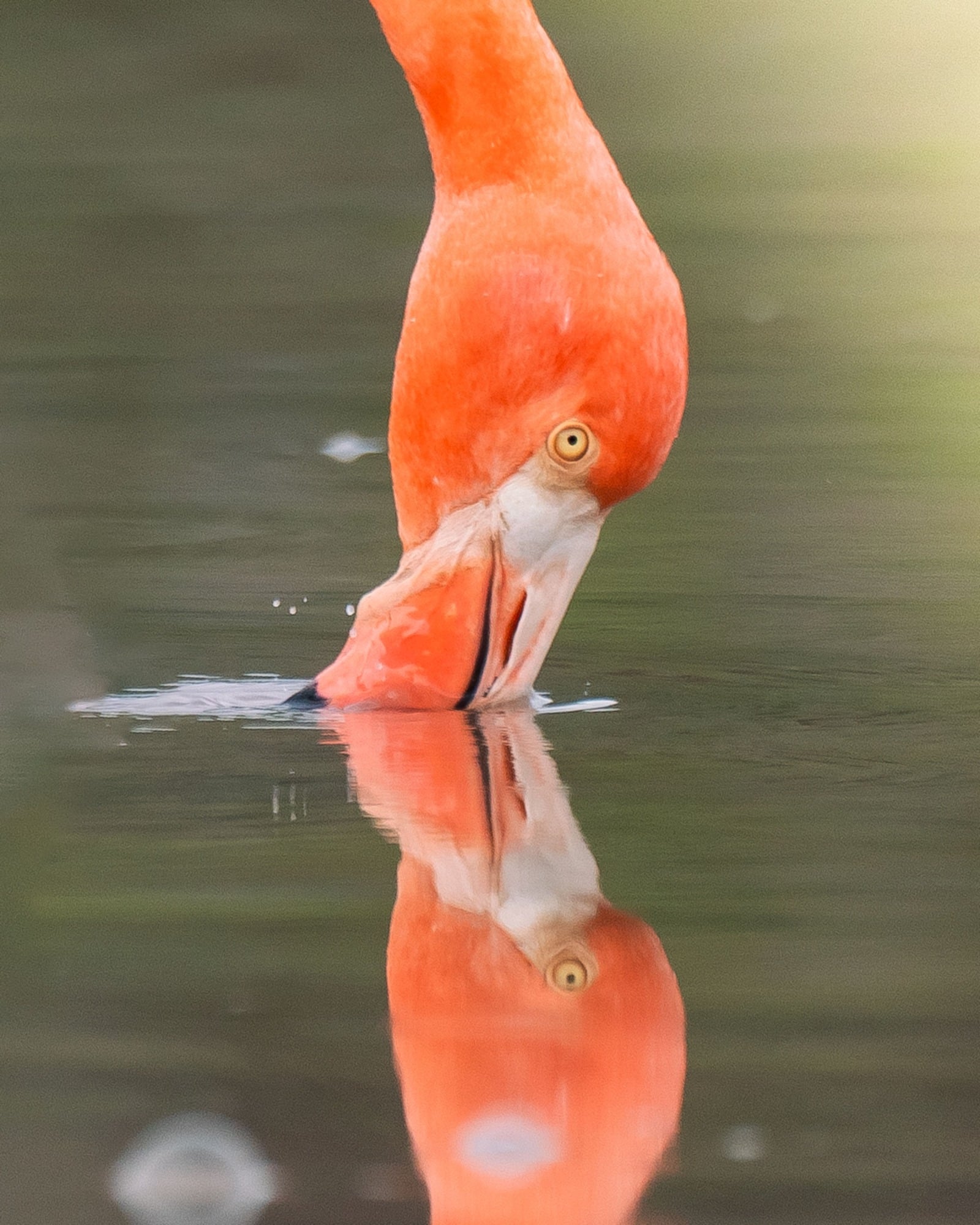
When feeding, a flamingo lowers its head until its bill is essentially upside down and sweeps it from side to side through the water. Specialized structures along the bill act like filters, allowing the bird to separate tiny food particles from water and mud.
This upside-down feeding position can look unusual the first time you see it, but it is one of the flamingo's most effective adaptations for living in shallow wetlands.
Why Do Flamingos Stand on One Leg?
One of the most recognizable flamingo facts is their habit of standing on one leg, sometimes even while sleeping.
Research suggests that the position requires surprisingly little muscular effort and may actually be more comfortable than standing on two legs for long periods. Tucking one leg against the body can also reduce heat loss through the legs and feet, helping flamingos conserve body heat.
If you see a Galapagos flamingo standing quietly on one leg beside a lagoon, it is therefore perfectly normal behavior rather than a sign that the bird is injured.
Flamingo Lifespan: How Long Do Flamingos Live?
American flamingos can live around 40–60 years, making them remarkably long-lived birds. There is not an equally precise published average specifically for the small Galapagos population, so we use the documented lifespan of the American flamingo species rather than claiming a separate Galapagos figure.
Their long lifespan makes the small size of the Galapagos population particularly interesting from a conservation perspective because individual adult birds can remain part of the population for decades.
Flamingo Eggs and Chicks
A flamingo pair normally lays one egg per nesting attempt in a raised nest built from mud. Both parents help incubate the flamingo egg for about 28 days.
Flamingo chicks hatch pale gray or white rather than pink, with relatively straight bills that gradually develop the characteristic downward curve as they grow. Both parents can produce a nutrient-rich substance called crop milk, which is used to feed the chick during its early development.
The young birds gradually gain their pink coloration as carotenoids from their diet accumulate in their feathers.
How Did Flamingos Reach Galapagos?
Genetic research indicates that the ancestors of today's Galapagos flamingos came from the Caribbean population of the American flamingo and later became isolated in the archipelago.
Scientists have found measurable genetic differences between Galapagos flamingos and Caribbean populations, as well as particularly low genetic diversity within the Galapagos group. The exact route taken by the first flamingos to reach these remote Pacific islands remains uncertain, but long-distance natural dispersal is the most likely explanation.
The species Phoenicopterus ruber itself is therefore not endemic to Galapagos, but the resident Galapagos population is genetically and physically distinctive and is considered an important independent evolutionary population.
How to Include Galapagos Flamingos in Your Trip
If flamingos are high on your wildlife list, I would favor an itinerary that gives you several nights on Isabela rather than a very short stop. More time on the island gives you multiple opportunities around Puerto Villamil's wetlands while also allowing you to enjoy the marine wildlife, beaches and volcanic landscapes that make Isabela so special.
Our 8 Day Galapagos Wisdom – Ideal gives you good time on Isabela while combining Santa Cruz, Santa Fe and Isabela with amazing adventures such as the Lava Tunnels and Cabo Rosas, snorkeling at La Galera, beaches and other wildlife experiences.
If you also want San Cristobal, our 8 Day Galapagos 360 Tour “A” – Ideal combines Santa Cruz, Santa Fe, Isabela and San Cristobal. During the Isabela portion, a visit to Flamingo Lagoon or the Giant Tortoise Breeding Center may be included when timing permits.
That is generally how we prefer to plan wildlife trips at Smart Galapagos: rather than building the entire vacation around one animal, we create an itinerary with several strong wildlife opportunities, so flamingos become one memorable part of a much bigger Galapagos experience.
You can also read our guides to Galapagos Giant Tortoises, Galapagos Blue-Footed Boobies, Galapagos Penguins and Galapagos Marine Iguanas.

Galapagos Flamingo FAQs
Where is the best place to see Galapagos flamingos?
For Island Hopping travelers, Isabela is our first choice, particularly the wetlands around Puerto Villamil, Galapagos Flamingo Lagoon and the ecological trail toward the Giant Tortoise Breeding Center. Rábida, Las Bachas and Punta Cormorant on Floreana are also excellent possibilities depending on your itinerary.
How many Galapagos flamingos are there?
The Charles Darwin Foundation currently estimates the resident population at around 600 birds.
What do Galapagos flamingos eat?
Their diet includes algae, small crustaceans, insect larvae, mollusks and other aquatic organisms. Carotenoids obtained through their food also help produce their distinctive pink coloration.
Why are flamingos pink?
Flamingos obtain carotenoid pigments from algae and other organisms in their diet. These pigments accumulate in their feathers and skin, gradually producing the pink coloration seen in adults.
Why do flamingos stand on one leg?
Research suggests that standing on one leg can require very little muscular effort and may also help reduce heat loss. Flamingos can maintain this position for long periods and may even sleep while standing on one leg.
How long do flamingos live?
American flamingos can live approximately 40–60 years, although there is no precise average published specifically for the Galapagos population.
How many eggs does a flamingo lay?
A flamingo pair normally lays one egg per nesting attempt. Both parents help incubate the egg and later care for the chick.
Are Galapagos flamingos endemic?
The American flamingo species Phoenicopterus ruber also occurs outside Galapagos, so the species itself is not endemic. However, the small resident Galapagos population is isolated, genetically distinctive and evolutionarily important.
Why Travel with Smart Galapagos?
Smart Galapagos is a locally based boutique Destination Management Company (DMC) with more than 15 years of experience, 1,500+ travelers and 450+ five-star reviews. Around 40–50% of our travelers come through referrals and recommendations from previous guests, something we are especially proud of.
If wildlife is particularly important to you, your personal Galapagos Travel Assistant can help design an itinerary around the animals and experiences you most want to see, from flamingos and penguins on Isabela to Giant Tortoises, seabirds and marine wildlife across the archipelago.
For every traveler, Smart Galapagos also plants a native tree in Ecuador as part of our commitment to more responsible travel.
Schedule a Free Meeting with a Galapagos Travel Assistant

Ready to plan your Galapagos journey?
Tell us what you want to experience, and we’ll help you build a trip around you.
Continue Exploring
More Travel Guides from the Smart Galapagos Journal
Galapagos Frigatebirds: Facts, Red Pouch & Best Places to See Them
Read Article
Galapagos Last Minute Cruise Deals: Save More Than 50%
Read Article
Galapagos Marine Iguanas: Facts, Where to See them & Best Tours
Read Article
El Niño in Galapagos: Wildlife, Weather & Travel Guide
Read Article
Galapagos Budget Honeymoon: Romantic Trips & Tips for Couples
Read Article
Galapagos Smart Packing List: What to Pack for Your Galapagos trip
Read Article
Galapagos Black Friday Deal: 15% Off Island Hopping Tours
Read Article
Galapagos in March: Weather, Wildlife, Snorkeling & Smart Travel Tips
Read Article
Best Things to Do in Galapagos: Wildlife, Snorkel, Beaches & Adventure
Read Article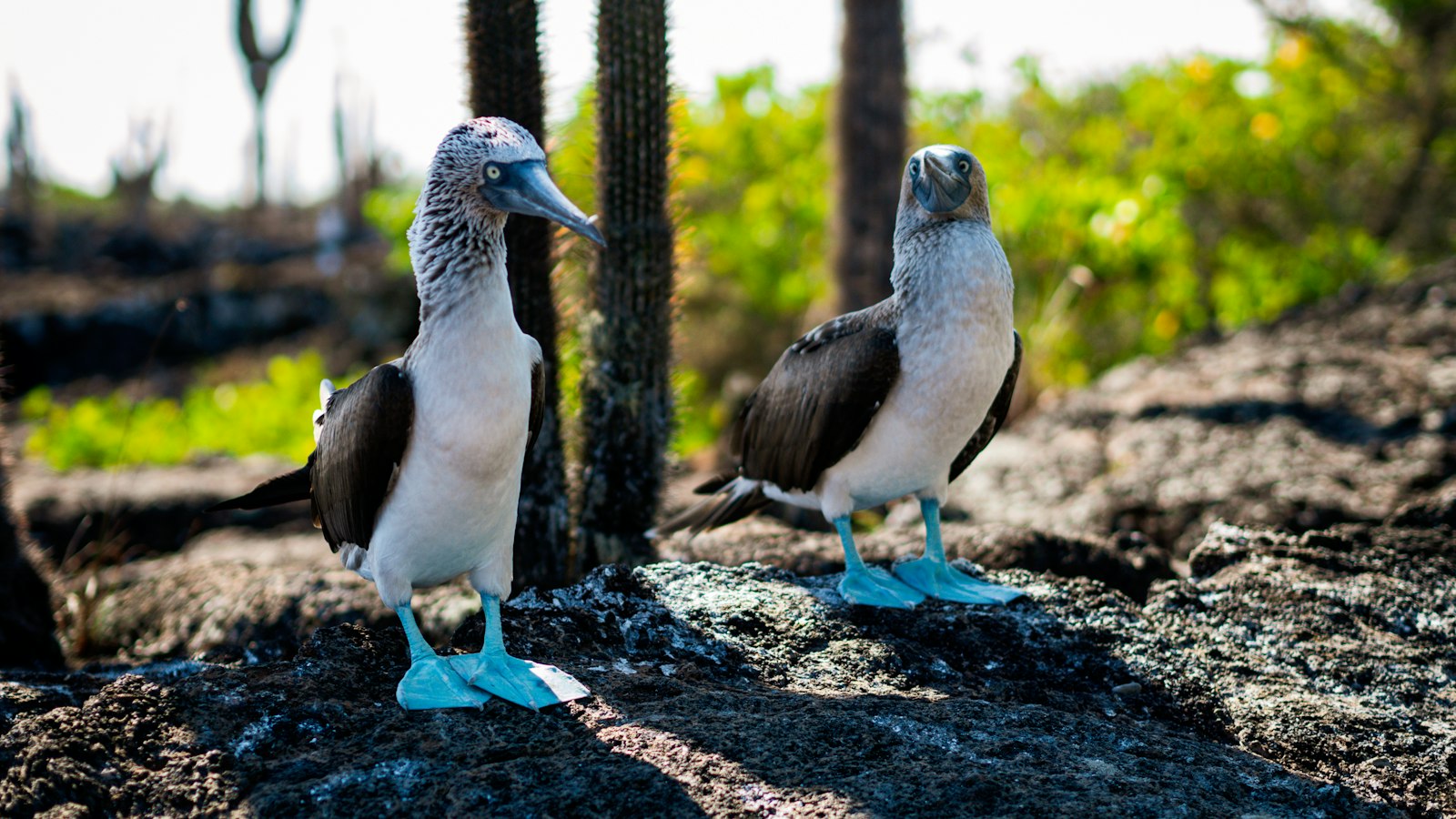
Galapagos Blue-Footed Boobies: Best Places, Facts & Mating Dance
Read Article
Best Galapagos Cruises for large Families & Groups
Read Article
Which Galapagos Island to Visit? Find the Best Island for You
Read Article
Galapagos Travel FAQs: Everything You Need to Know Before You Go
Read Article
The Smart Galapagos Difference: Why Specialists Matter
Read Article
Instagram vs. Reality: Is Galapagos Really Worth the Hype?
Read Article
7 Best Galapagos Tours for Couples: Island Hopping & Romantic Cruises
Read Article
Galapagos Penguins: 12 Fun Facts & Best Places to See Them
Read Article
How to Choose the Perfect Galapagos Cruise: A Complete Guide
Read Article
Galapagos Giant Tortoises: Where to See Them, Best Time to Visit & Best Tours
Read Article
Galapagos Travel Guide 2026: Smart Tips for Planning Your Trip
Read Article
Why Visit Galapagos? 8 Reasons It Belongs on Your Travel List
Read Article
Best Galapagos Island Hopping Tours for Couples: 7 to 10 Day Itineraries
Read Article
Bartolome Island & Sullivan Bay: Why We Love It
Read Article
North Seymour Island Yacht Tour: Why We Love It
Read Article
Why Travel to Galapagos with Smart Galapagos?
Read Article
Galapagos Cruise vs Island Hopping: Which Is Better for Your Trip?
Read Article
Best Time to Visit Galapagos: Month-by-Month Weather & Wildlife Guide
Read Article
Do You Need a Guide in the Galapagos?
Read Article