
Galapagos Frigatebirds: Facts, Red Pouch & Best Places to See Them
Published: · JPM
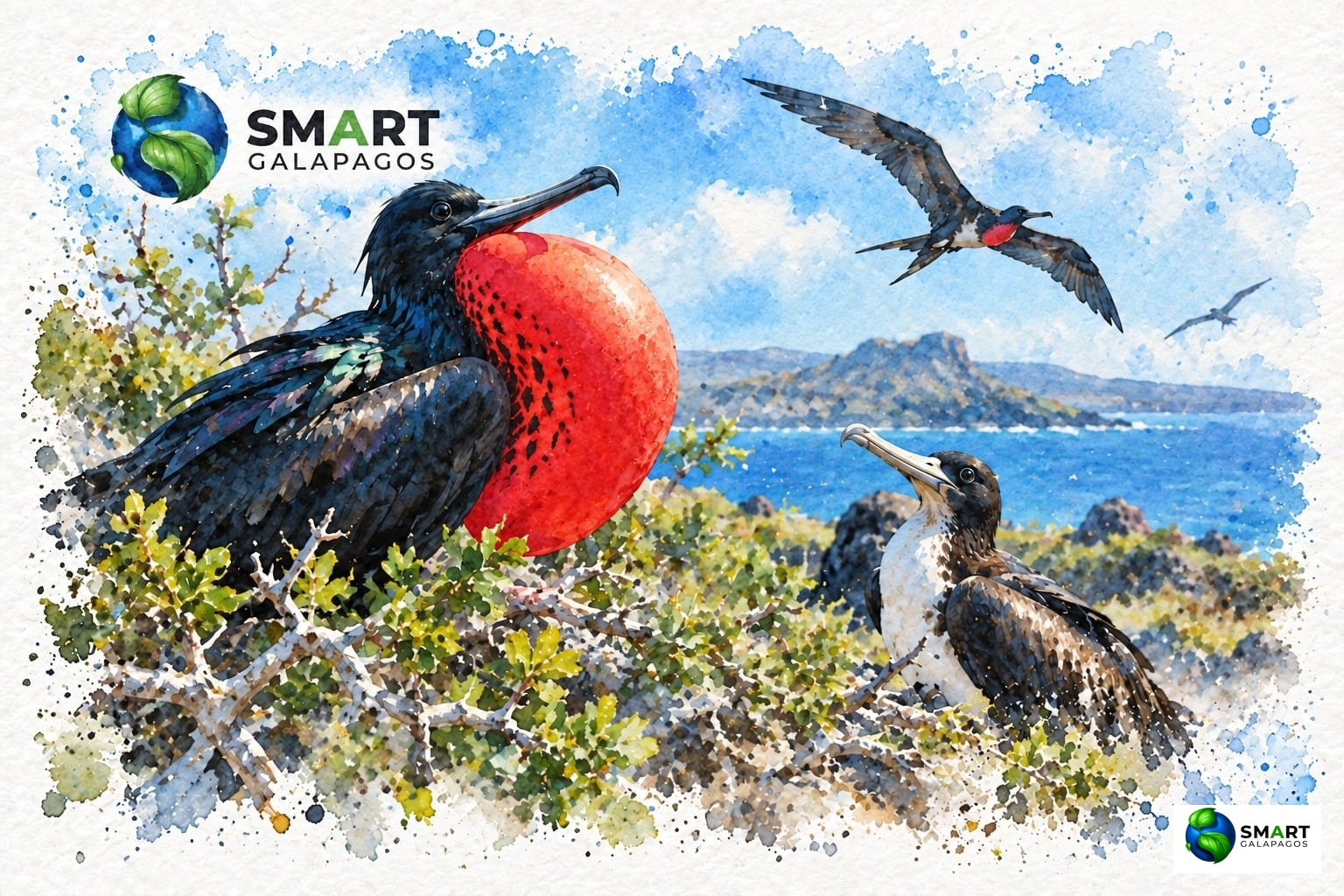
Discover the two frigate bird species of the Galapagos Islands, why males display their bright red throat pouches, how to tell them apart, and the best islands to observe these remarkable seabirds both on an affordable Island Hopping tour as well as on a Luxury Galapagos Cruise.
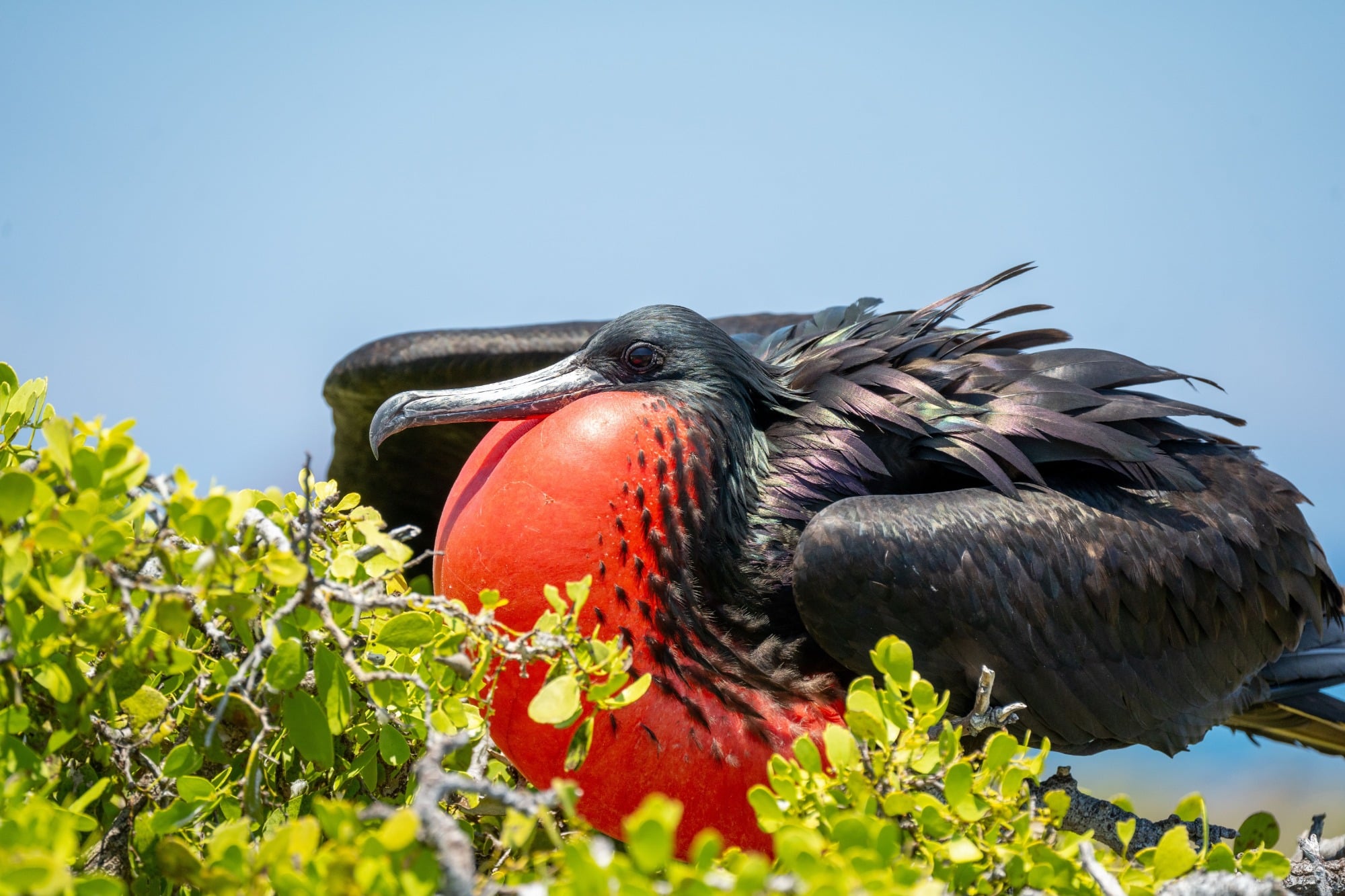
Frigatebirds are among the easiest Galapagos seabirds to recognize when you look up. Their long, angular wings, deeply forked tails and effortless flight make them a familiar sight above the islands. But their most fascinating feature appears during courtship: males inflate a bright red throat pouch to attract females.
The Galapagos is home to two species: the magnificent frigatebird (Fregata magnificens) and the great frigatebird (Fregata minor). Although they look similar at first, their feather sheen and some physical characteristics can help you distinguish them.
If you are interested in birdwatching, wildlife photography or simply learning more about Galapagos wildlife, this guide explains what makes frigatebirds special, where you may see them and how to include their main habitats in your itinerary.
Frigatebird Galapagos: Key takeaways
- Two frigate bird species live in the Galapagos: the magnificent frigatebird and the great frigatebird.
- Male frigatebirds inflate their red throat pouches during courtship displays.
- North Seymour is one of the best-known places to observe magnificent frigatebirds.
- Genovesa is an important destination for great frigatebirds and other seabirds.
- Frigatebirds can be seen throughout the year, although breeding activity varies between islands and environmental conditions.
- North Seymour is one of the few places you can see both species of Frigatebirds.
What Makes Galapagos Frigate birds So Unique?
Frigatebirds are large seabirds with long, narrow wings and deeply forked tails. Their distinctive shape helps them take advantage of warm air currents, allowing them to glide over the ocean for long periods with relatively little effort.
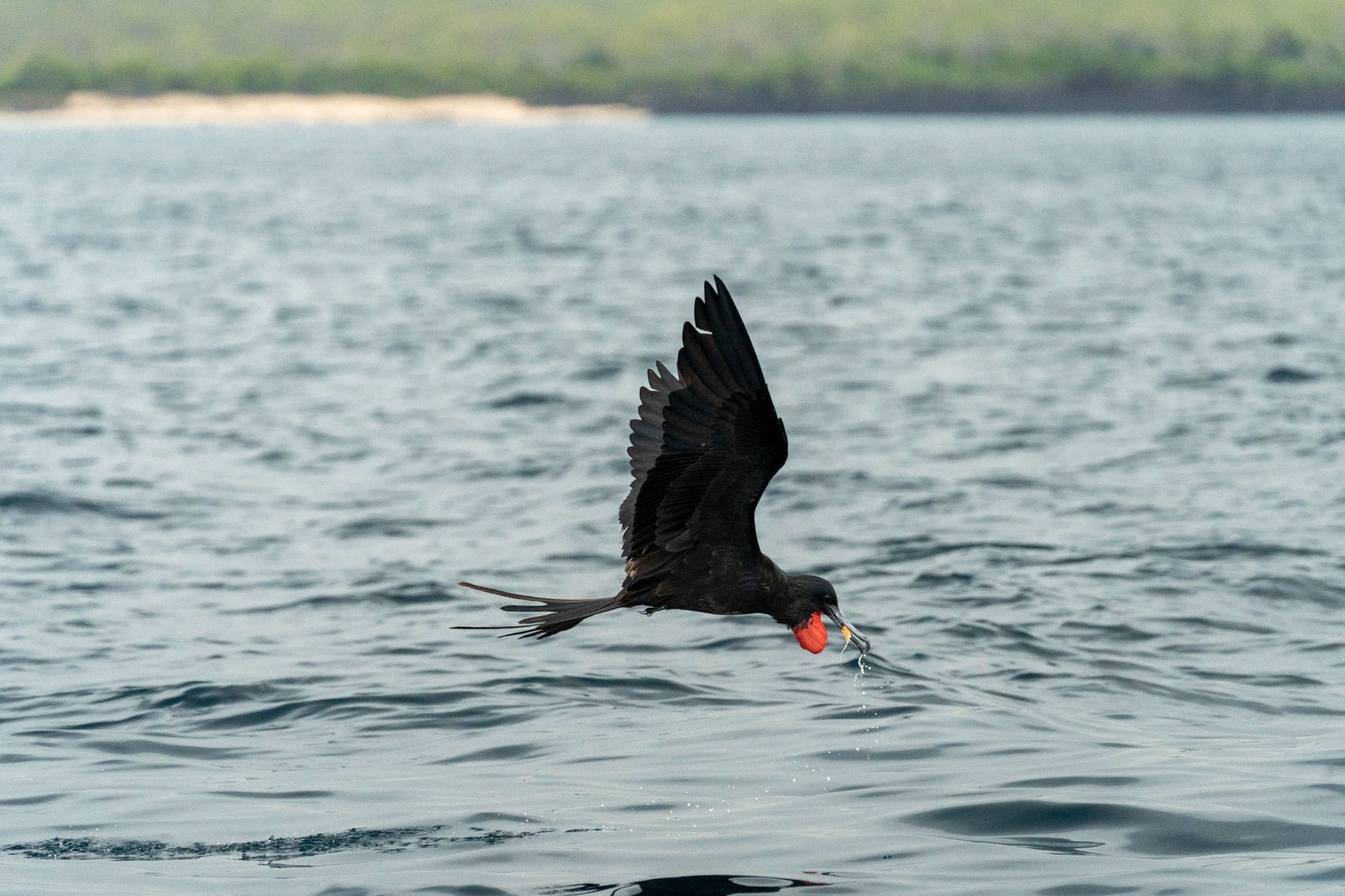
Unlike many other seabirds, frigatebirds do not have waterproof feathers. They are therefore not adapted to diving underwater to catch fish. Instead, they take prey from near the ocean's surface, including flying fish and squid, and sometimes steal food from other seabirds.
This behavior is known as kleptoparasitism. A frigatebird may chase a Galapagos Blue Footed booby or another seabird until it releases its catch, allowing the frigatebird to grab the food in midair. It is an unusual feeding strategy and one of the reasons these birds are so interesting to observe.
Frigatebirds in Galapagos also spend much of their time soaring above coastal areas, mangroves and open water. Their flight skills are impressive, particularly when several birds circle above a nesting colony.
Why Do Male Frigatebirds Have a Red Throat Pouch?
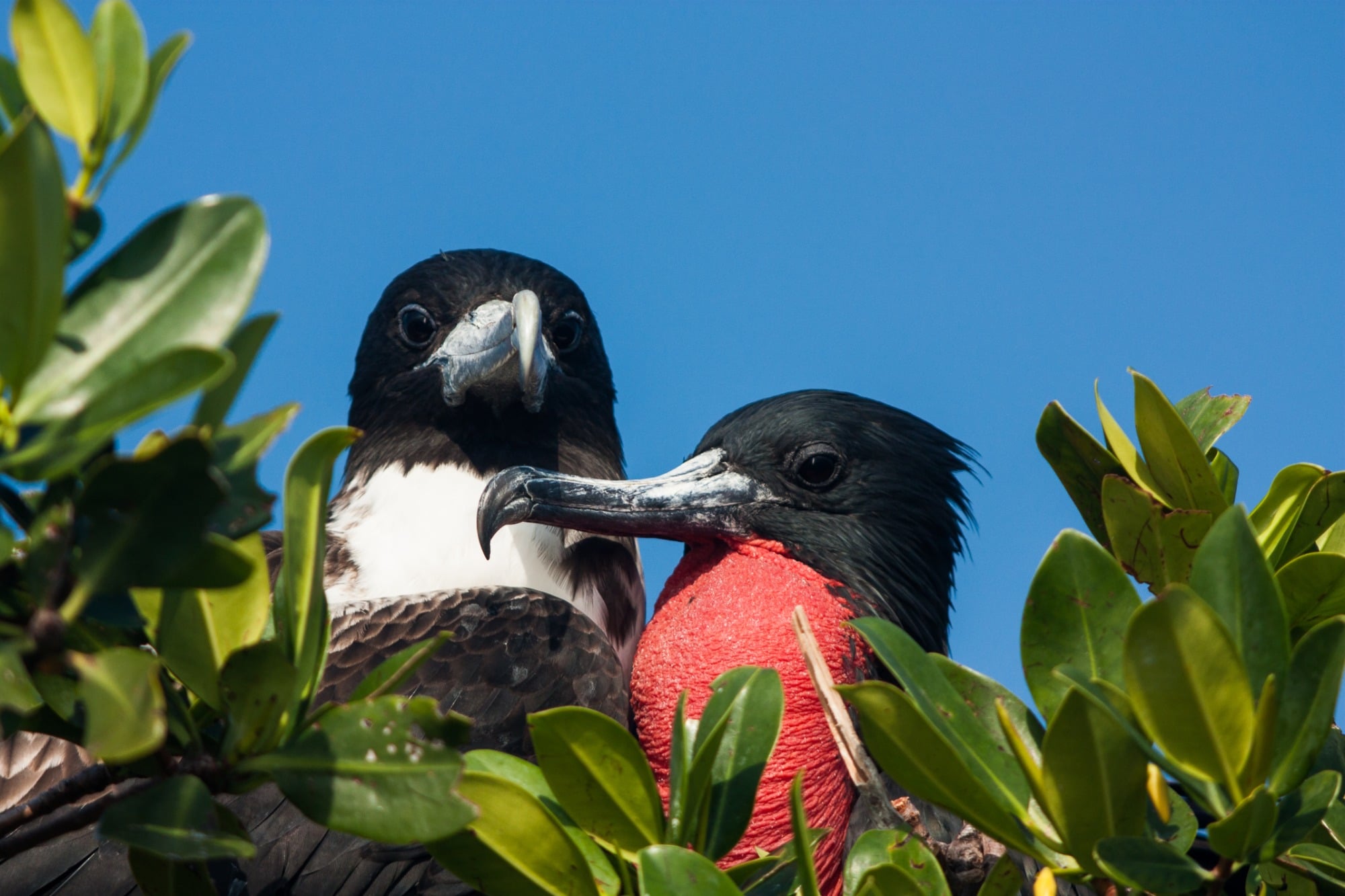
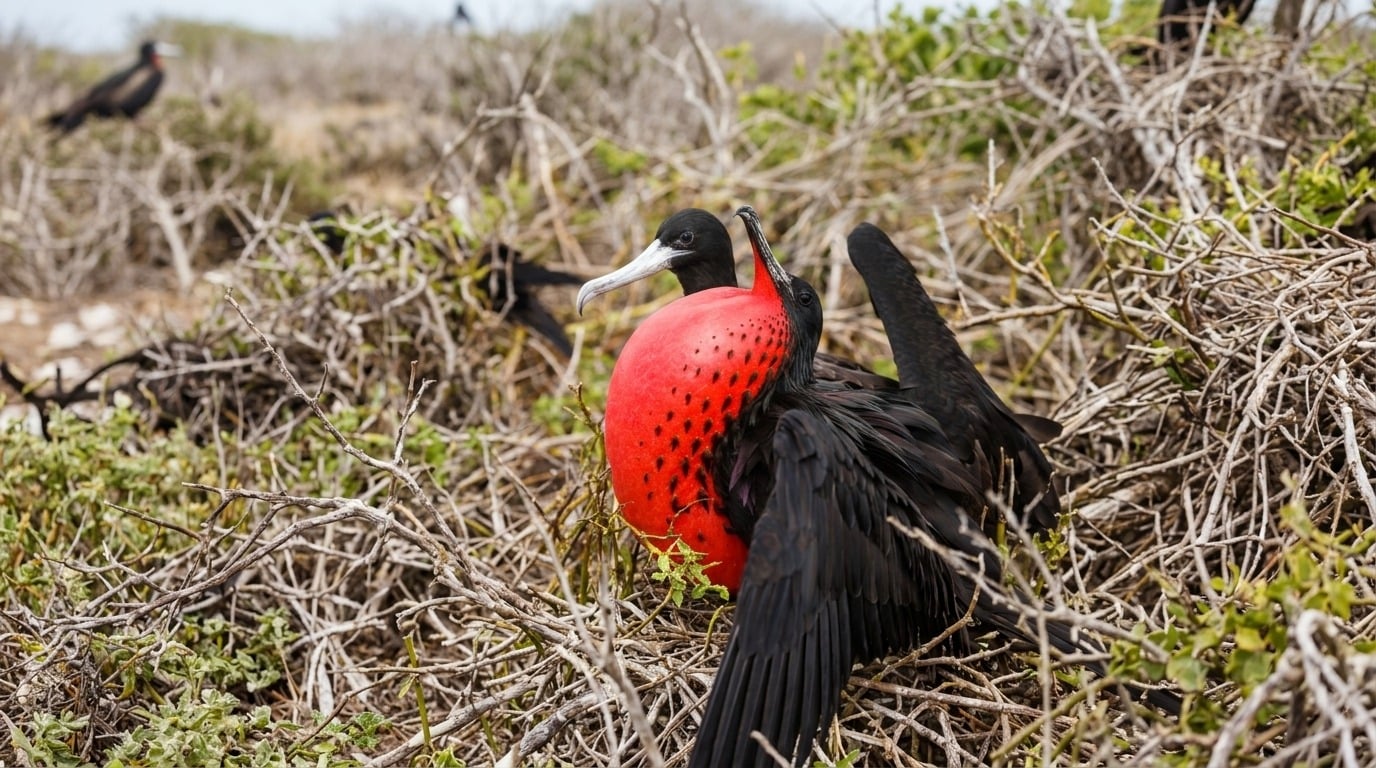
The red throat pouch, also called a gular sac, is one of the most recognizable features of male frigatebirds. During courtship, males inflate this large, flexible pouch with air to attract females.
Rather than displaying individually, males often gather in groups within breeding colonies. They perch in trees or shrubs, spread their wings, tilt their heads upward and inflate their bright red pouches while making calls and other display movements.
Females fly over these display areas and assess potential mates. The larger and brighter pouch makes the male particularly noticeable against the dark feathers and green vegetation.
The pouch is not permanently inflated. It becomes especially prominent during courtship displays and early breeding activity, so you may see males with or without an inflated pouch depending on the timing of your visit.
Watching several males displaying at the same time is one of the most memorable birdwatching experiences you may have in Galapagos
Magnificent Frigatebird vs Great Frigatebird in Galapagos
The magnificent frigatebird (Fregata magnificens) and the great frigatebird (Fregata minor) share many characteristics. Both have dark plumage, long wings, forked tails and males with inflatable red throat pouches.
However, there are a few details that can help you distinguish them, particularly when observing adult males in good light.
| Characteristic | Magnificent Frigatebird | Great Frigatebird |
|---|---|---|
| Scientific name | Fregata magnificens | Fregata minor |
| Male back sheen | Purple or purplish | Green |
| Male throat pouch | Red | Red |
| General appearance | Long wings and deeply forked tail | Long wings and deeply forked tail |
| Galapagos distribution | Throughout the archipelago | Throughout the archipelago |
One of the easiest differences to look for is the iridescent sheen on the male's back feathers. Great frigatebirds tend to show a green sheen, while magnificent frigatebirds display a more purple or purplish reflection when sunlight reaches their feathers.
The difference can be subtle, especially when birds are flying high above you. Lighting, viewing angle and distance all affect how clearly you can identify the species.
Females and immature birds have different plumage patterns, so identifying them may require looking at additional details beyond the color of the back.
Frigate Bird Diet: What Do Galapagos Frigate birds Eat?
Frigatebirds mainly eat fish and squid, especially prey that comes close to the ocean surface. They are superb aerial hunters but, unlike many seabirds, their feathers are not highly waterproof, so they avoid diving or sitting on the water. Instead, they swoop down and grab fish, squid and other food from the surface without landing.
Their diet can also include crustaceans, jellyfish, eggs and chicks of other seabirds, and even newly hatched sea turtles. In Galapagos, frigatebirds may also follow fishing boats or take advantage of feeding activity when larger fish drive smaller prey toward the surface. Although they are famous for stealing food from other birds, frigatebirds catch much of their own food.
How Long Do Frigate Birds Fly?
Frigatebirds are extraordinary long-distance flyers. Their extremely long wings and low body weight allow them to use rising columns of warm air, called thermals, to climb thousands of meters and then glide for long distances while using very little energy. They can remain on the wing day and night for several days at a time without returning to land.
One study conducted with Great Frigatebirds from Genovesa Island in Galapagos recorded individual trips lasting as long as 10 days and covering up to 3,000 kilometers. Research has also shown that frigatebirds can briefly sleep while flying, sometimes using only one side of the brain at a time. Over longer periods they can spend weeks at sea, making them some of the most impressive aerial travelers in the bird world.
Smart Fact: Frigatebirds are so well designed for flight that they can soar for hours with barely a flap of their wings.
Why Do Frigate Birds Steal Food?
Frigatebirds are sometimes called “pirate birds” because they chase other seabirds, including Blue-footed Boobies and tropicbirds, until the other bird drops or regurgitates its recently caught food. The frigatebird then performs an impressive aerial maneuver and catches the meal before it reaches the water.
Scientists call this behavior kleptoparasitism, but it is only one part of the frigatebird's feeding strategy. They are perfectly capable of catching food themselves and normally take fish and squid directly from or just above the ocean surface. Stealing food is an additional opportunity, helped by their exceptional speed and maneuverability in the air.
In Galapagos, this behavior is particularly interesting to watch because frigate birds frequently share the same areas with boobies and other seabirds. North Seymour is one of our favorite places to observe these interactions and also offers excellent opportunities to see males displaying their famous inflated red throat pouch.
Frigate Bird Facts for Kids
Frigatebirds may look a little like prehistoric birds when they are soaring overhead, but what makes them really special is how perfectly adapted they are to life in the air. A Galapagos Magnificent Frigate bird can have a wingspan of around 2.4 meters (almost 8 feet) while weighing only around 1–1.5 kg, giving it an extraordinary ability to glide with very little effort.
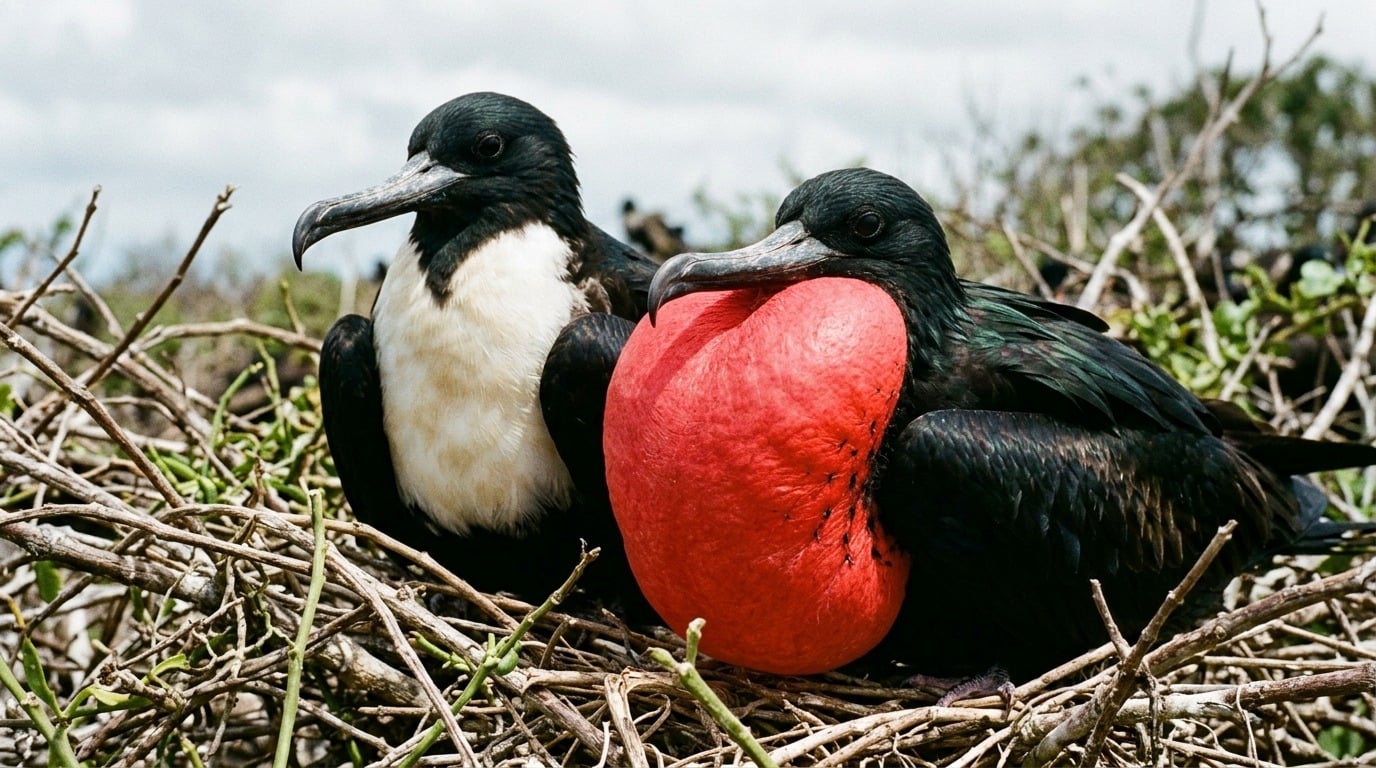
Male frigatebirds have a bright red throat pouch, called a gular sac, which they inflate like a balloon to attract females. Females are actually larger than males and can be recognized by their white chest. Frigatebirds can fly for days, briefly sleep while flying, steal food from other seabirds in mid-air, and catch fish without landing on the ocean. Their feathers are not very waterproof, which is one reason they spend so much of their lives above the water instead of swimming in it.
And there are two species of frigatebird you can see in Galapagos: the Magnificent Frigatebird (Fregata magnificens) and the Great Frigatebird (Fregata minor). Learning to tell them apart is part of the fun when you visit the islands.
Where Can You See Frigatebirds in Galapagos?
Frigatebirds can be observed across the Galapagos archipelago, but some islands are particularly interesting because of their breeding colonies and seabird habitats. You may not even need a special trip to spot them, as frigatebirds frequently follow boats and hover over fishing docks in the towns like Puerto Ayora or Puerto Baquerizo Moreno. However, if you want your itinerary to include a visit to these magnificent seabirds, a few destinations are worth prioritizing.

1. North Seymour Island
North Seymour Island is one of the best-known places to observe frigate birds in the Galapagos. The island supports breeding colonies of both magnificent and great frigatebirds, and its visitor trail offers opportunities to watch these seabirds resting, nesting and displaying in their natural habitat.
During courtship activity, you may see males with their bright red throat pouches inflated. Even outside these displays, the island is worth visiting for its birdlife, which also includes blue-footed boobies and swallow-tailed gulls.
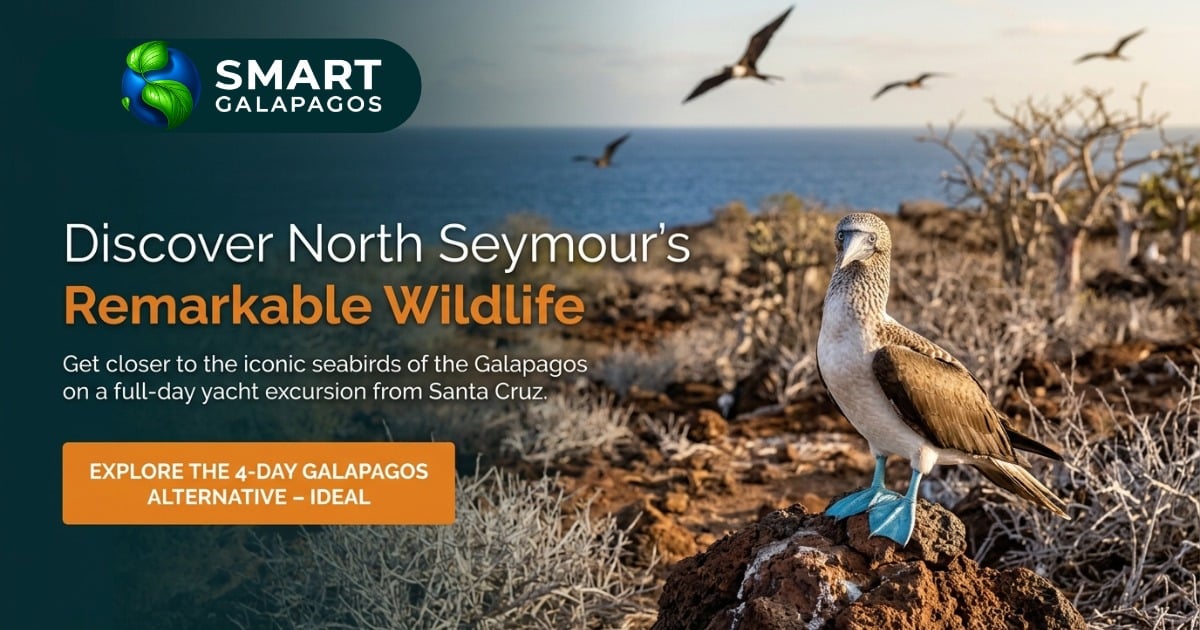
For travelers staying on Santa Cruz, North Seymour can be visited on a full-day yacht excursion without changing hotels. It is one of the destinations we particularly enjoy recommending to travelers interested in Galapagos wildlife.
Explore the North Seymour Island Yacht Tour to learn more about the wildlife, island walk and experience.
2. Genovesa Island
Genovesa is one of the most interesting destinations in Galapagos for travelers who enjoy seabirds. Great Galapagos frigate birds are particularly associated with this island, where they share the habitat with red-footed boobies, Nazca boobies, storm petrels and other seabirds.
Two important visitor sites are Darwin Bay and Prince Philip's Steps. Both offer opportunities to observe bird colonies, although the species and behaviors you encounter depend on the location and natural conditions during your visit.
Genovesa is generally included in selected multi-day Galapagos cruise itineraries rather than standard Island Hopping day trips. If seabird watching is a priority, talk with your Galapagos travel assistant to select a smart cruise itinerary with visits to this incredible island and which visitor sites are included.
Check here our live cruise availability.
3. San Cristobal Island
San Cristobal is another destination where you may observe both frigatebird species. The island's Frigatebird Hill, known locally as Cerro Tijeretas, is an interesting place to look for these seabirds while enjoying views of the surrounding coastline.
The trail begins near the San Cristobal Interpretation Center close to the town, and leads to viewpoints overlooking the ocean. You may see Galapagos frigate birds soaring above the cliffs or resting in nearby vegetation.
For travelers choosing a Galapagos Island Hopping trip, San Cristobal can be included in a multi-island itinerary. Selected cruises also visit the island, depending on their route.
What About Floreana and Española?
These islands are also worth mentioning if you are fine-tuning your route. Floreana is one of the main breeding areas for Galapagos magnificent frigatebirds, while great frigatebirds can be observed particularly around Española and other islands in the southern and northern archipelago.
Ultimately, you do not need to visit every island to enjoy frigatebird watching. The most practical approach is to select an itinerary that includes the visitor sites most relevant to the wildlife you hope to observe.
When Is the Best Time to See Frigatebirds in Galapagos?
Galapagos Frigate birds can be observed throughout the year, as these birds stay close to their nesting territories across the islands. However, their breeding and courtship activity varies between colonies and shifts from year to year depending on local environmental conditions.
If you would like to see males displaying their bright red throat pouches, it is worth prioritizing destinations with active breeding colonies, particularly North Seymour. Keep in mind that courtship displays are natural behaviors not scheduled wildlife events and ocean conditions such as El Niño can also influence seabird breeding cycles. Because of this, seeing an inflated pouch on a specific date cannot be guaranteed.
For general frigatebird watching in Galapagos, there is no need to limit your trip to a single month. Both species are present year-round, though the behaviors you witness will naturally change throughout the seasons.
How to Include Frigatebird Watching in Your Galapagos Trip
The best way to see frigatebirds depends on how you prefer to explore the islands and which visitor sites you want to prioritize.
Island Hopping: A Flexible Way to Visit North Seymour
If you prefer staying in hotels on inhabited islands, Island Hopping is a very practical option. From Santa Cruz, you can take a full-day yacht excursion to North Seymour and return to your hotel in Puerto Ayora afterward.
You can also combine Santa Cruz with Isabela and San Cristobal, enjoying different coastal and highland wildlife experiences along the way. Depending on your itinerary and availability, additional day trips to uninhabited islands may also be possible.
Galapagos Cruises: Access to More Remote Seabird Destinations
A cruise may be more suitable if you want to reach remote islands such as Genovesa and visit multiple seabird habitats during a single expedition.
Because cruise itineraries vary considerably, do not choose a yacht based solely on its name or category. Always review the specific visitor sites, route, duration, and wildlife opportunities before making a decision.

Smart Tips for Galapagos Frigatebird Watching
A few simple recommendations can make your wildlife experience more rewarding.
1. Bring binoculars or a camera with a zoom lens. Frigatebirds often soar high above the islands or perch in vegetation. Binoculars help you observe their behavior and notice details such as the iridescent feathers.
2. Look at the males' back feathers in good sunlight. A green sheen is associated with great frigatebirds, while a purple sheen is associated with magnificent frigatebirds. It is a fun detail to look for when comparing the two species.
3. Stay on the marked visitor trails. Frigatebirds nest in trees and shrubs, and breeding colonies should never be disturbed. Follow your naturalist guide's instructions and observe the birds without approaching their nests.
Smart Tip: If frigatebirds are one of the main reasons you want to visit Galapagos, mention this before choosing your itinerary. Your Travel Assistant can help prioritize destinations such as North Seymour or Genovesa instead of selecting a route without checking its visitor sites.
Frequently Asked Questions About Galapagos Frigatebirds
Where can I see frigatebirds in Galapagos?
You may observe Galapagos frigatebirds on several islands, including North Seymour, Genovesa, San Cristobal, Floreana and Española. North Seymour is particularly well known for its breeding colonies, while Genovesa is an important destination for great frigatebirds.
Why do male frigatebirds have red throat pouches?
Male frigatebirds inflate their red throat pouches during courtship displays to attract females. They often gather in groups, inflate their pouches and make calls while females fly overhead.
What is the difference between magnificent and great frigatebirds?
The easiest characteristic to look for in adult males is the sheen on their back feathers. Great frigatebirds tend to have a green sheen, while magnificent frigatebirds have a purple or purplish sheen. Both species have red throat pouches.
Can you see frigatebirds in Galapagos all year?
Yes. Both species can be observed throughout the year. However, breeding activity and courtship displays vary between islands and depend on environmental conditions.
Can I see frigatebirds without taking a cruise?
Yes. Galapagos Island hopping reaches San Cristobal's Cerro Tijeretas and day trips to North Seymour from Santa Cruz. Frigatebirds also hover over boats and fishing docks in town.
Why Travel with Smart Galapagos?
Smart Galapagos is a local Galapagos travel specialist with more than 15 years of experience helping travelers plan Island Hopping trips and cruises. We have welcomed more than 1,500 travelers and received over 450 five-star reviews, with many new guests discovering us through recommendations from previous travelers.
Your personal Galapagos Travel Assistant helps you compare itineraries, selected hotels, yachts and local experiences according to your dates, interests and budget. We also provide local support before and during your trip, so you have someone familiar with the islands helping coordinate the details.
For every traveler, we plant a native tree in Ecuador as part of our commitment to more responsible travel.
Schedule a Free Meeting with a Galapagos Travel Assistant
Ready to Plan Your Galapagos Adventure?
Whether you want to photograph magnificent frigatebirds displaying their red pouches, explore seabird colonies on remote islands or combine wildlife encounters with snorkeling and island exploration, choosing the right itinerary makes a difference.
Tell us your travel dates, the wildlife you are interested in and how you prefer to explore. Our team will help you find an itinerary that makes sense for your trip.

\
Ready to plan your Galapagos journey?
Tell us what you want to experience, and we’ll help you build a trip around you.
Continue Exploring
More Travel Guides from the Smart Galapagos Journal
Galapagos Flamingo: Facts, Population & Best Places to See Them
Read Article
Galapagos Last Minute Cruise Deals: Save More Than 50%
Read Article
Galapagos Marine Iguanas: Facts, Where to See them & Best Tours
Read Article
El Niño in Galapagos: Wildlife, Weather & Travel Guide
Read Article
Galapagos Budget Honeymoon: Romantic Trips & Tips for Couples
Read Article
Galapagos Smart Packing List: What to Pack for Your Galapagos trip
Read Article
Galapagos Black Friday Deal: 15% Off Island Hopping Tours
Read Article
Galapagos in March: Weather, Wildlife, Snorkeling & Smart Travel Tips
Read Article
Best Things to Do in Galapagos: Wildlife, Snorkel, Beaches & Adventure
Read Article
Galapagos Blue-Footed Boobies: Best Places, Facts & Mating Dance
Read Article
Best Galapagos Cruises for large Families & Groups
Read Article
Which Galapagos Island to Visit? Find the Best Island for You
Read Article
Galapagos Travel FAQs: Everything You Need to Know Before You Go
Read Article
The Smart Galapagos Difference: Why Specialists Matter
Read Article
Instagram vs. Reality: Is Galapagos Really Worth the Hype?
Read Article
7 Best Galapagos Tours for Couples: Island Hopping & Romantic Cruises
Read Article
Galapagos Penguins: 12 Fun Facts & Best Places to See Them
Read Article
How to Choose the Perfect Galapagos Cruise: A Complete Guide
Read Article
Galapagos Giant Tortoises: Where to See Them, Best Time to Visit & Best Tours
Read Article
Galapagos Travel Guide 2026: Smart Tips for Planning Your Trip
Read Article
Why Visit Galapagos? 8 Reasons It Belongs on Your Travel List
Read Article
Best Galapagos Island Hopping Tours for Couples: 7 to 10 Day Itineraries
Read Article
Bartolome Island & Sullivan Bay: Why We Love It
Read Article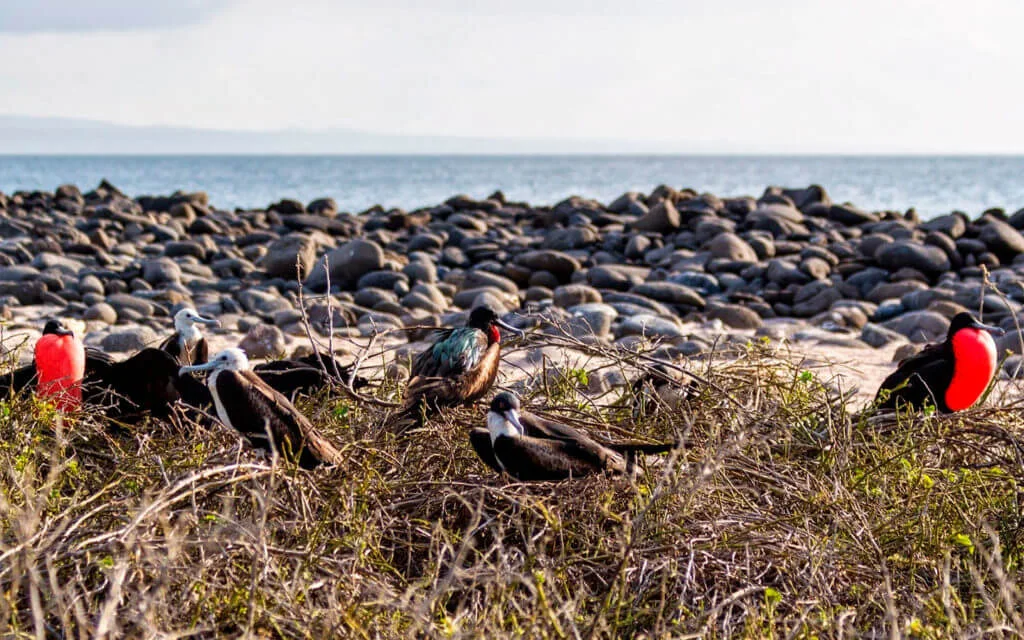
North Seymour Island Yacht Tour: Why We Love It
Read Article
Why Travel to Galapagos with Smart Galapagos?
Read Article
Galapagos Cruise vs Island Hopping: Which Is Better for Your Trip?
Read Article
Best Time to Visit Galapagos: Month-by-Month Weather & Wildlife Guide
Read Article
Do You Need a Guide in the Galapagos?
Read Article